Laminated Couplings
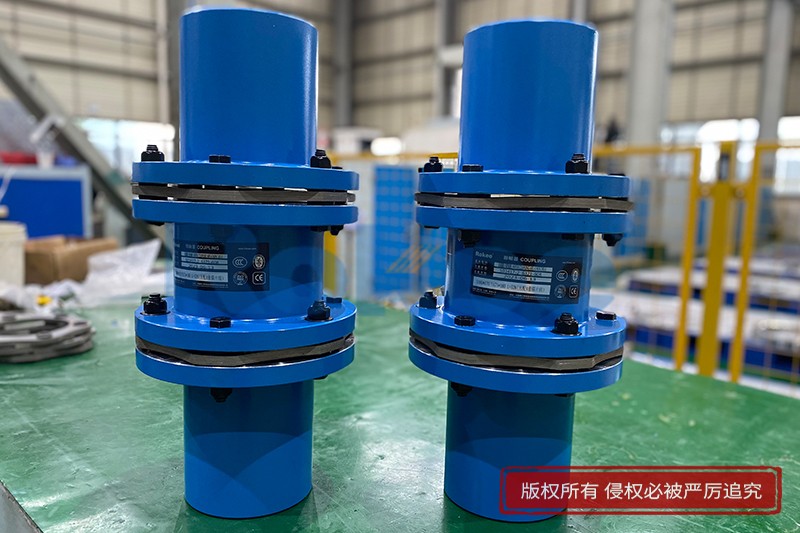
Rokee® is Laminated Couplings Supplier from China, Support Customization and Export, due to excellent quality, complete technical services and superior cost performance, Rokee® Laminated Couplings have been serving more than 60 countries and regions in the world, effectively operating in many corners of the world.
Rokee's Laminated Coupling is a high-quality product developed independently on basis of combination of advanced products from Europe and Japan, etc. Laminated Coupling has smaller size, larger torque of the same model, more reasonable proportioning size, large compensation scope, light weight and small rotational inertia. With modularized design, Laminated Coupling is easy for assembly, maintenance and replacement. Laminated Coupling is performance far exceeds the one of JM series product. Laminated Coupling is widely applied in the fields of fan systems, turboset and other pumps, etc.
-
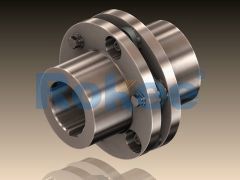
JMI Diaphragm Coupling
JMI metal diaphragm coupling adopts the single-piece design, suitable for short distance transmission. Besides, the semi-coupling sleeve at one end has a counterbore, facilitating the fixing of the shaft end. -
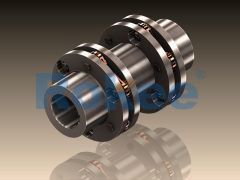
JMIJ Diaphragm Coupling
JMIJ metal diaphragm coupling is designed with intermediate shaft, suitable for long distance transmission. Besides, the semi-coupling sleeve at one end has a counterbore, facilitating the fixing of the shaft end. -
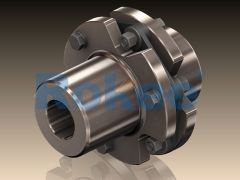
JMII Diaphragm Coupling
JMII metal diaphragm coupling also adopts the single-piece design but has no counterbore, suitable for short distance transmission, with more compact structure. -
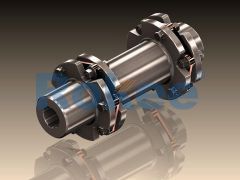
JMIIJ Diaphragm Coupling
JMIIJ metal diaphragm coupling is designed with intermediate shaft, suitable for long distance transmission. Besides, the semi-coupling sleeve at both ends have no counterbore. -
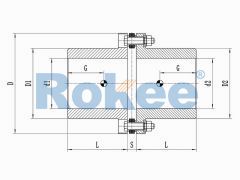
RLA Standard Single Diaphragm Coupling
The classic design of metal flexible diaphragm couplings is a reliable choice for medium to low speed applications, but cannot compensate for radial deviation. -
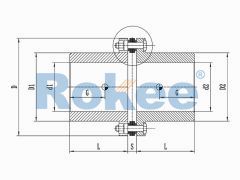
RLM Small Single Diaphragm Coupling
The RLM standard single section small metal diaphragm coupling is suitable for various industrial process pumps and small torque working situations with a working speed not exceeding 5000rpm, and cannot compensate for radial errors. -
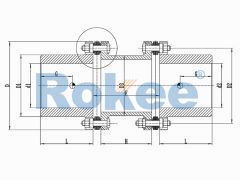
RLMD Small Double Diaphragm Coupling
The RLMD standard double section small metal diaphragm coupling is suitable for various industrial process pumps and small torque working occasions with a working speed not exceeding 5000rpm. -
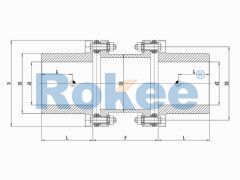
RLAD Standard Double Diaphragm Coupling
The classic design of metal flexible diaphragm couplings is a reliable choice for medium to low speed applications. -
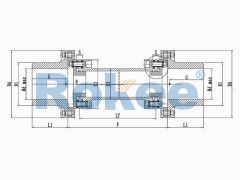
RLAT Super Long Wheelbase Diaphragm Coupling
Adopting an intermediate shaft design, suitable for ultra long shaft spacing power transmission applications. -
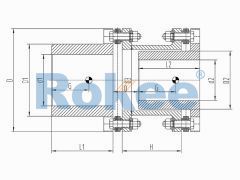
RLAR Single Shaft Sleeve Reverse-mounting Diaphragm Coupling
Single side shaft sleeve reverse installation design, suitable for occasions with limited shaft head distance. -
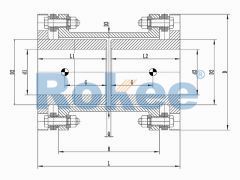
RLARD Double Shaft Sleeve Reverse-mounting Diaphragm Coupling
The double-sided shaft sleeve reverse installation design is also applicable in situations where the distance from the shaft head is limited or the additional bending moment is smaller. -
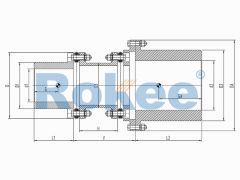
RLAF Large & Small Shaft Mounted Diaphragm Coupling
The size difference design of the bilateral shaft sleeve is suitable for situations where the diameter difference between the two ends of the shaft is significant. -
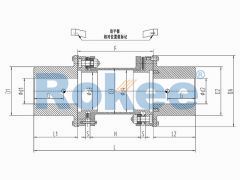
RLQA No Flange Quick Installation Metal Diaphragm Coupling
Suitable for various industrial process pumps, fans, and other medium to low speed applications, with a maximum speed generally not exceeding 25000 rpm. It meets the requirements of API610/ISO14691 and is one of the first products for API applications. -
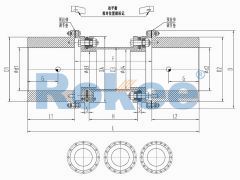
RLQF Flange Type Quick Installation Diaphragm Coupling
Suitable for drum pressure fans, turbine compressors, and other high speed applications, with a maximum speed of up to 35000rpm. -
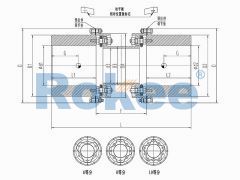
RLQU Improved Flange Quick Installation Diaphragm Coupling
The improved RLQF has smaller additional bending moments and better performance. Suitable for drum pressure fans, turbine compressors, and other high speed applications. -
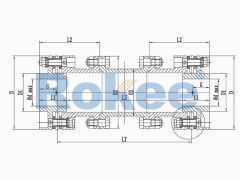
RLHD High Speed Diaphragm Coupling
Suitable for higher speed applications, it also adopts a flexible component integrated assembly design, with a maximum speed of up to 42000rpm.
In the realm of mechanical power transmission, couplings serve as critical components that connect two shafts to transmit torque while accommodating various forms of misalignment. Among the diverse types of couplings available, laminated couplings have emerged as a preferred choice in numerous industrial applications due to their unique combination of flexibility, durability, and precision. Unlike rigid couplings that demand near-perfect alignment between shafts, or elastic couplings that rely on rubber or plastic elements for flexibility, laminated couplings utilize thin, layered materials to achieve torque transmission and misalignment compensation.
1. Fundamental Principles of Laminated Couplings
At its core, a laminated coupling functions by transmitting torque from an input shaft to an output shaft through a series of thin, overlapping laminations. These laminations, typically arranged in a disc or plate configuration, are designed to flex under stress, allowing the coupling to accommodate three primary types of shaft misalignment: angular misalignment (where the shafts intersect at an angle), parallel misalignment (where the shafts are offset parallel to each other), and axial misalignment (where the shafts move toward or away from each other). The flexibility of the laminations is the key to the coupling’s ability to compensate for these misalignments without transferring excessive stress to the connected shafts, bearings, or other components.
Torque transmission in a laminated coupling occurs through the shear force exerted on the laminations. When the input shaft rotates, it imparts a rotational force to one set of lamination attachments, which in turn transfers this force through the laminations to the output shaft’s attachment points. The laminations are engineered to withstand high shear loads while maintaining their flexibility, ensuring efficient torque transfer even under dynamic operating conditions. Unlike elastic couplings that may suffer from torsional backlash or hysteresis, laminated couplings offer near-zero backlash, making them suitable for applications requiring precise motion control.
2. Structural Characteristics of Laminated Couplings
Laminated couplings typically consist of three main components: two hubs, a set of laminations, and fasteners. Each component plays a crucial role in the overall performance and reliability of the coupling.
The hubs are the connecting elements that attach the coupling to the input and output shafts. They are usually machined from high-strength metals to ensure a secure fit and efficient torque transfer. Common hub designs include clamp-style hubs (which use screws to clamp onto the shaft) and keyed hubs (which utilize a keyway and set screw to prevent slippage). The choice of hub design depends on the application’s torque requirements, shaft size, and installation constraints. Clamp-style hubs are often preferred for their ease of installation and ability to provide a uniform clamping force, while keyed hubs are suitable for high-torque applications where additional security against slippage is required.
The laminations are the defining feature of laminated couplings, and their design and arrangement vary depending on the coupling’s intended use. Most laminations are thin, flat plates made from metal or composite materials, with holes drilled around their perimeter for attachment to the hubs. The number of laminations in a coupling can vary, with more laminations typically providing higher torque capacity and greater flexibility. Some laminated couplings use a single disc of laminations, while others employ multiple discs arranged in a stack to enhance performance. The shape of the laminations also varies—common shapes include circular, square, and rectangular, with each shape offering different levels of flexibility and torque transmission capabilities.
Fasteners, such as bolts or rivets, are used to secure the laminations between the two hubs. These fasteners must be strong enough to withstand the shear and tensile forces generated during torque transmission, while also allowing the laminations to flex freely. In some designs, the fasteners are equipped with washers or spacers to ensure proper spacing between the laminations and prevent friction that could hinder flexibility.
3. Material Selection for Laminated Couplings
The performance of a laminated coupling is heavily influenced by the materials used for its components, particularly the laminations. The selection of lamination materials is based on a range of factors, including torque requirements, operating temperature, environmental conditions, and desired flexibility. The most common materials used for laminations include stainless steel, carbon steel, and composite materials such as fiberglass-reinforced plastic (FRP).
Stainless steel is a popular choice for laminations due to its excellent corrosion resistance, high strength, and durability. It is well-suited for applications in harsh environments, such as those involving moisture, chemicals, or high temperatures. Stainless steel laminations also offer good fatigue resistance, making them ideal for applications with frequent start-stop cycles or dynamic torque loads. However, stainless steel is relatively heavy and may be more expensive than other materials, which can be a consideration for cost-sensitive applications.
Carbon steel is another common material for laminations, offering high strength and torque capacity at a lower cost than stainless steel. It is often used in industrial applications where corrosion resistance is not a primary concern, such as in manufacturing machinery or power transmission systems operating in dry environments. Carbon steel laminations can be heat-treated to enhance their strength and durability, further expanding their range of applications. However, carbon steel is prone to corrosion, so it may require protective coatings or regular maintenance in humid or corrosive environments.
Composite materials, such as FRP, are increasingly being used for laminations due to their lightweight, high strength-to-weight ratio, and excellent corrosion resistance. Composite laminations offer greater flexibility than metal laminations, allowing for higher levels of misalignment compensation. They are also non-conductive, making them suitable for applications involving electrical components or environments where electrical interference is a concern. However, composite materials may have lower torque capacity than metal laminations and can be more susceptible to damage from excessive heat or impact, limiting their use in high-temperature or heavy-duty applications.
The hubs of laminated couplings are typically made from high-strength metals such as steel, aluminum, or alloy steel. Steel hubs offer the highest torque capacity and durability, making them suitable for heavy-duty applications. Aluminum hubs are lightweight and corrosion-resistant, making them ideal for applications where weight is a critical factor, such as in aerospace or automotive systems. Alloy steel hubs combine the strength of steel with improved corrosion resistance and fatigue performance, making them a versatile choice for a wide range of applications.
4. Key Advantages of Laminated Couplings
Laminated couplings offer a range of advantages over other types of couplings, making them a preferred choice in many industrial and commercial applications. These advantages include excellent misalignment compensation, near-zero backlash, high torque capacity, durability, and low maintenance requirements.
One of the primary advantages of laminated couplings is their ability to compensate for multiple types of misalignment. Unlike rigid couplings, which can only accommodate minimal misalignment and may cause excessive wear on shafts and bearings, laminated couplings can handle significant angular, parallel, and axial misalignment. This flexibility reduces the need for precise shaft alignment during installation, saving time and labor costs. It also minimizes the stress on connected components, extending their service life and reducing the risk of premature failure.
Near-zero backlash is another key advantage of laminated couplings. Backlash, or the amount of free movement between the input and output shafts, can cause inaccuracies in motion control applications. Laminated couplings, which rely on the flexure of laminations rather than sliding or rotating components, have virtually no backlash, making them ideal for applications requiring precise positioning, such as in robotics, CNC machinery, and automation systems. This precision ensures that the output shaft follows the input shaft’s motion exactly, improving the overall performance and accuracy of the system.
Laminated couplings also offer high torque capacity relative to their size and weight. The use of high-strength materials for the laminations and hubs allows these couplings to transmit large amounts of torque without sacrificing flexibility. This makes them suitable for a wide range of applications, from small precision machinery to large industrial equipment. Additionally, the laminations are designed to distribute torque evenly, reducing stress concentrations and improving the coupling’s overall durability.
Durability and long service life are additional benefits of laminated couplings. The materials used in their construction, such as stainless steel and carbon steel, are resistant to fatigue and wear, even under continuous operation. Unlike elastic couplings, which may degrade over time due to aging, heat, or chemical exposure, laminated couplings require minimal maintenance and can operate reliably for extended periods. This reduces downtime and maintenance costs, making them a cost-effective choice for long-term applications.
Low maintenance requirements are another advantage of laminated couplings. Unlike couplings with lubricated components or elastic elements that need to be replaced regularly, laminated couplings have no moving parts that require lubrication or periodic replacement. Routine maintenance typically involves inspecting the laminations for signs of wear or damage, checking the fasteners for tightness, and ensuring that the hubs are securely attached to the shafts. This simplicity makes laminated couplings easy to maintain, even in hard-to-reach locations.
5. Application Scenarios of Laminated Couplings
Due to their unique combination of advantages, laminated couplings are used in a wide range of applications across various industries. These applications include industrial machinery, robotics and automation, aerospace and defense, automotive systems, and renewable energy systems.
In industrial machinery, laminated couplings are commonly used in manufacturing equipment such as CNC lathes, milling machines, and grinding machines. These applications require precise motion control and the ability to accommodate minor misalignments between the motor and the machine’s drive shaft. Laminated couplings’ near-zero backlash and excellent misalignment compensation make them ideal for these applications, ensuring accurate and reliable operation. They are also used in conveyors, pumps, and compressors, where they transmit torque efficiently while minimizing stress on shafts and bearings.
Robotics and automation systems rely heavily on laminated couplings for their precision and flexibility. Robotic arms, for example, require precise positioning and smooth motion, which laminated couplings provide through their near-zero backlash and ability to compensate for misalignments between the motor and the arm’s joints. Automated assembly lines also use laminated couplings to connect motors to conveyors, grippers, and other components, ensuring reliable and efficient operation. The lightweight nature of some laminated couplings, particularly those made with composite materials, is also beneficial in robotics applications where weight reduction is critical for improving maneuverability and energy efficiency.
Aerospace and defense applications demand high reliability and performance in extreme environments, making laminated couplings an ideal choice. They are used in aircraft engines, landing gear systems, and navigation equipment, where they transmit torque while accommodating misalignments caused by thermal expansion, vibration, or structural flexure. The corrosion resistance of stainless steel and composite laminations makes them suitable for use in harsh aerospace environments, such as those involving high temperatures, humidity, and exposure to chemicals. Additionally, their low maintenance requirements are critical in aerospace applications where downtime is costly and maintenance access is often limited.
In the automotive industry, laminated couplings are used in a variety of systems, including powertrain components, steering systems, and electric vehicle (EV) drivetrains. In powertrain applications, they transmit torque from the engine to the transmission, accommodating misalignments caused by engine vibration and thermal expansion. In EV drivetrains, laminated couplings are used to connect the electric motor to the gearbox, providing precise torque transmission and misalignment compensation. The lightweight and high efficiency of laminated couplings make them well-suited for EV applications, where energy efficiency and weight reduction are key factors in extending range.
Renewable energy systems, such as wind turbines and solar tracking systems, also utilize laminated couplings. Wind turbines require couplings that can transmit large amounts of torque from the rotor to the generator while accommodating misalignments caused by wind-induced vibration and structural flexure. Laminated couplings’ high torque capacity, durability, and ability to handle misalignments make them ideal for this application. Solar tracking systems use laminated couplings to connect motors to the tracking mechanism, ensuring precise movement of the solar panels to maximize energy collection. The corrosion resistance of laminated couplings is also beneficial in renewable energy applications, which often operate in outdoor environments exposed to the elements.
6. Selection and Maintenance Guidelines for Laminated Couplings
Selecting the right laminated coupling for a specific application requires careful consideration of several factors, including torque requirements, shaft size and alignment, operating temperature, environmental conditions, and cost. Following these selection guidelines can help ensure that the coupling performs optimally and has a long service life.
First, determine the maximum torque that the coupling will need to transmit. This includes both the nominal torque of the application and any peak torque that may occur during start-up or dynamic operation. The coupling’s torque capacity should be greater than the maximum torque requirement to ensure reliable operation and prevent premature failure. It is also important to consider the coupling’s speed rating, as some materials may have limitations at high rotational speeds.
Next, assess the expected misalignment between the input and output shafts. This includes angular, parallel, and axial misalignment. The coupling’s misalignment compensation capabilities should match or exceed the expected misalignment to avoid excessive stress on the coupling and connected components. It is important to note that excessive misalignment can reduce the coupling’s service life and torque capacity, so it is best to minimize misalignment wherever possible through proper installation.
Operating temperature is another critical factor in coupling selection. Different materials have different temperature limits—for example, composite materials may degrade at temperatures above 150°C, while stainless steel can withstand temperatures up to 300°C or higher. It is important to select a coupling that can operate reliably within the application’s temperature range to prevent material degradation and loss of performance.
Environmental conditions, such as moisture, chemicals, and dust, should also be considered. For applications in corrosive environments, stainless steel or composite laminations are preferred to prevent rust and degradation. In dusty or dirty environments, it may be necessary to select a coupling with a protective cover to prevent debris from accumulating on the laminations and affecting their flexibility.
Shaft size and attachment method are also important considerations. The coupling’s hubs must be compatible with the diameter of the input and output shafts. Clamp-style hubs are easier to install and remove, making them suitable for applications where frequent maintenance or shaft replacement is required. Keyed hubs provide a more secure connection for high-torque applications but require a keyway to be machined into the shaft.
Cost is another factor to consider, although it should not be the sole determining factor. While carbon steel couplings are generally less expensive than stainless steel or composite couplings, they may not be suitable for all applications. It is important to balance cost with performance and durability to ensure that the selected coupling provides the best value over its service life.
Proper maintenance is essential to ensure the long-term performance and reliability of laminated couplings. Routine maintenance tasks include inspecting the laminations for signs of wear, such as cracks, tears, or deformation. If any damage is detected, the laminations should be replaced immediately to prevent failure. Fasteners should also be checked regularly for tightness, as loose fasteners can cause excessive vibration and reduce the coupling’s performance. Additionally, the hubs should be inspected to ensure that they are securely attached to the shafts and that there is no slippage.
It is also important to avoid overloading the coupling beyond its torque capacity, as this can cause permanent damage to the laminations and hubs. If the application’s torque requirements change, the coupling should be replaced with one that can handle the new torque load. Finally, proper installation is critical to minimizing misalignment and ensuring optimal performance. Shafts should be aligned as accurately as possible during installation, and the coupling should be installed according to the manufacturer’s instructions.
7. Conclusion
Laminated couplings have established themselves as a versatile and reliable component in mechanical power transmission systems, offering a unique combination of flexibility, precision, durability, and low maintenance requirements. Their ability to compensate for multiple types of misalignment, near-zero backlash, and high torque capacity make them suitable for a wide range of applications across industries such as manufacturing, robotics, aerospace, automotive, and renewable energy.
The selection of the right laminated coupling depends on a variety of factors, including torque requirements, misalignment, operating temperature, environmental conditions, and shaft size. By carefully considering these factors and following proper maintenance guidelines, users can ensure that their laminated couplings perform optimally and have a long service life.
As technology continues to advance, the materials and designs of laminated couplings are likely to evolve, further enhancing their performance and expanding their range of applications. Whether in precision machinery, heavy-duty industrial equipment, or cutting-edge renewable energy systems, laminated couplings will continue to play a critical role in ensuring efficient and reliable power transmission for years to come.
« Laminated Couplings » Post Date: 2023/9/22
URL: https://www.rokeecoupling.com/en/tags/laminated-couplings.html
- 2023-10-09Laminated Coupling Structure
- 2023-10-09Laminated Coupling Efficiency
- 2023-10-09Axial Displacement Of Laminated Coupling
- 2023-10-09Permissible Speed Of Laminated Coupling
- 2023-10-08Types Of Laminated Couplings
- 2023-10-08Laminated Coupling Damping
- 2023-10-07Laminated Coupling Model
- 2023-10-07Structural Diagram Of Laminated Coupling
- 2023-09-27Laminated Coupling Shear Pin
- 2023-09-25Function Of Laminated Coupling
- 2023-09-25Schematic Diagram Of Laminated Coupling
- 2023-09-25Dynamic Characteristics Of Laminated Couplings
- 2023-09-22Centering Deviation Of Laminated Coupling
- 2023-09-22Dynamic Balance Of Laminated Coupling
- 2023-09-22Lamination Thickness Of Laminated Coupling
- 2023-09-22Laminated Coupling Manufacturer
- 2023-09-22Installation Clearance Of Laminated Coupling
- 2023-09-22Compensation Value Of Laminated Coupling
- 2023-09-22Dimensions Of Laminated Couplings
- 2023-09-22Laminated Coupling Function
- 2023-09-22Laminated Coupling Processing
- 2023-09-22Model Of Laminated Coupling Nut
- 2023-09-22Laminated Coupling Brand
- 2023-09-22Principle Of Concentricity Correction For Laminated Couplings
- 2023-09-22Advantages Of Laminated Couplings
- 2023-09-22Principle Of Laminated Coupling
- 2023-09-22Characteristics Of Laminated Couplings
- 2023-09-22External Spring Of Laminated Coupling
- 2023-09-22Laminated Coupling Form
- 2023-09-22Selection Of Laminated Coupling
- 2023-09-22How To Adjust The Laminated Coupling
- 2023-09-22Picture Of Laminated Coupling
- 2023-09-22End Face Clearance Of Laminated Coupling