XL Flexible Star Coupling
Rokee® provide XL Flexible Star Coupling, non-standard coupling customization, drawing design, batch processing, and export the product to your location.
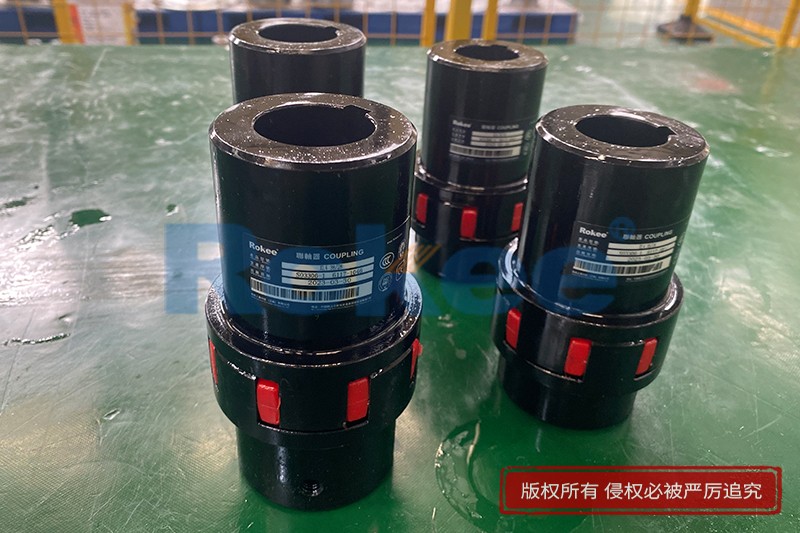
In the realm of mechanical power transmission, couplings serve as the critical link between rotating shafts, ensuring the smooth transfer of torque while accommodating various misalignments and reducing operational stress. Among the diverse range of couplings available, the XL Flexible Star Coupling has emerged as a reliable and versatile solution for numerous industrial applications. Characterized by its unique star-shaped flexible element, this type of coupling balances flexibility and torque-bearing capacity, making it suitable for both light-duty and medium-duty power transmission systems.
The structural design of the XL Flexible Star Coupling is a key factor contributing to its performance and versatility. Unlike rigid couplings that offer no flexibility, the XL Flexible Star Coupling consists of three main components: two metal hubs, a star-shaped flexible element (often referred to as the "star washer" or "flexible spider"), and fastening elements such as bolts or screws. The hubs are typically manufactured from high-strength metals, including carbon steel, alloy steel, or aluminum alloy, depending on the application requirements for torque capacity and weight. The choice of hub material is crucial as it directly impacts the coupling's ability to withstand rotational forces and resist wear over time. Carbon steel hubs are preferred for general industrial applications due to their excellent strength-to-cost ratio, while aluminum alloy hubs are used in applications where weight reduction is a priority, such as in some automotive or aerospace auxiliary systems.
The star-shaped flexible element is the defining feature of the XL Flexible Star Coupling, and its design and material selection are paramount to the coupling's flexibility and durability. This element is usually made from elastic materials such as natural rubber, synthetic rubber (e.g., nitrile rubber, neoprene), or polyurethane. These materials possess excellent elastic properties, allowing the coupling to accommodate axial, radial, and angular misalignments between the connected shafts. The star-shaped design typically features several arms (usually three or six) that fit into corresponding grooves on the inner surfaces of the two hubs. When torque is transmitted from one shaft to the other, the flexible arms deform slightly to absorb misalignments and reduce vibration, while still maintaining a secure connection between the hubs. The geometry of the star element is precision-engineered to ensure uniform stress distribution across its arms, preventing premature failure due to localized stress concentrations.
The working principle of the XL Flexible Star Coupling revolves around the synergy between the rigid hubs and the flexible star element. When the driving shaft rotates, it transmits torque to the connected hub. This torque is then transferred through the star-shaped flexible element to the driven hub, which in turn drives the secondary shaft. During this process, the flexible element plays two critical roles: torque transmission and misalignment compensation. Axial misalignment (parallel displacement along the shaft axis) is accommodated by the stretching or compressing of the star element's arms. Radial misalignment (offset perpendicular to the shaft axis) is compensated by the bending of the arms, while angular misalignment (tilt between the two shafts) is absorbed by the differential deformation of the arms on either side of the star. Additionally, the elastic nature of the star element helps to dampen vibrations generated by the rotating shafts, reducing noise and minimizing wear on other components in the power transmission system, such as bearings and gears.
One of the primary advantages of the XL Flexible Star Coupling is its excellent misalignment compensation capability. In real-world industrial applications, perfect alignment between two shafts is nearly impossible to achieve and maintain. Factors such as installation errors, thermal expansion and contraction of shafts during operation, and structural vibrations can all lead to misalignments. Rigid couplings would transfer these misalignments directly to the shafts and associated components, causing excessive stress, premature wear, and even catastrophic failure. In contrast, the XL Flexible Star Coupling can accommodate significant levels of misalignment (typically up to 0.5 mm radial misalignment, 2 mm axial misalignment, and 1-2 degrees angular misalignment, depending on the specific model) without compromising torque transmission efficiency. This feature not only simplifies the installation process but also extends the service life of the entire power transmission system.
Another key advantage of the XL Flexible Star Coupling is its effective vibration damping and noise reduction properties. Rotating machinery often generates vibrations due to imbalances in the shafts, gears, or other components. These vibrations can propagate through the power transmission system, causing noise pollution and damaging sensitive equipment. The elastic star element of the XL coupling acts as a buffer, absorbing and dissipating vibrational energy before it can be transmitted to other parts of the machine. This not only creates a quieter working environment but also reduces the mechanical stress on bearings, seals, and other precision components, lowering maintenance costs and improving overall system reliability. In applications where smooth operation is critical, such as in precision machining tools or medical equipment, this vibration damping capability makes the XL Flexible Star Coupling an ideal choice.
The XL Flexible Star Coupling also offers the benefits of simple structure, easy installation, and low maintenance requirements. Compared to more complex coupling designs (e.g., gear couplings or disc couplings), the XL coupling consists of only a few components, making it easy to assemble and disassemble. Installation typically involves mounting the two hubs on the respective shafts (using keyways, set screws, or compression fittings), inserting the star-shaped flexible element into the hub grooves, and securing the assembly with bolts. No specialized tools or highly skilled personnel are required for installation, which helps to reduce downtime and installation costs. Additionally, the coupling's design minimizes wear components; the only part that typically requires replacement is the flexible star element, which can be easily swapped out without disassembling the entire power transmission system. This simplicity and ease of maintenance make the XL Flexible Star Coupling a cost-effective solution for many industrial applications.
Furthermore, the XL Flexible Star Coupling exhibits good torque transmission capacity relative to its size and weight. While it is not designed for heavy-duty applications requiring extremely high torque (such as in large industrial turbines or mining equipment), it performs exceptionally well in light to medium-duty applications, transmitting torques ranging from a few newton-meters to several hundred newton-meters, depending on the model and material selection. The combination of compact size and adequate torque capacity makes the XL coupling suitable for use in space-constrained environments, such as in small electric motors, pumps, and conveyors. Additionally, the use of lightweight materials (e.g., aluminum alloy hubs) makes the coupling ideal for applications where weight is a critical factor, such as in automotive accessories (e.g., power steering pumps, alternators) and small aerospace components.
The versatility of the XL Flexible Star Coupling is reflected in its wide range of applications across various industries. In the manufacturing industry, it is commonly used in conveyor systems, where it connects electric motors to conveyor rollers. The coupling's misalignment compensation capability is particularly valuable in conveyor systems, as long conveyor belts can often cause slight shaft misalignments due to thermal expansion or structural deflection. Additionally, the vibration damping properties of the XL coupling help to reduce noise in manufacturing facilities, improving the working environment for employees.
In the automotive industry, the XL Flexible Star Coupling finds applications in auxiliary systems such as power steering, air conditioning compressors, and alternators. These systems require reliable torque transmission between small electric motors and rotating components, while also accommodating the slight misalignments that can occur due to engine vibration and thermal expansion. The lightweight design of the XL coupling is also beneficial in automotive applications, as it helps to reduce the overall weight of the vehicle, improving fuel efficiency.
The water treatment and pumping industry also relies heavily on the XL Flexible Star Coupling for connecting electric motors to centrifugal pumps, submersible pumps, and other pumping equipment. Pumping systems often experience shaft misalignments due to the installation of the pump and motor on different bases or due to the flexing of the base during operation. The XL coupling's ability to accommodate these misalignments ensures efficient torque transmission and prevents premature wear on the pump's bearings and seals. Additionally, the coupling's simple maintenance requirements are advantageous in water treatment facilities, where equipment downtime must be minimized to ensure continuous water supply.
Other notable applications of the XL Flexible Star Coupling include precision machining tools (e.g., lathes, milling machines), where smooth operation and accurate torque transmission are critical for achieving high machining precision; medical equipment (e.g., centrifuges, diagnostic machines), where low vibration and noise are essential; and renewable energy systems (e.g., small wind turbines, solar tracking systems), where reliable power transmission in harsh environmental conditions is required.
To ensure the optimal performance and long service life of the XL Flexible Star Coupling, proper maintenance and inspection are essential. Regular maintenance practices include periodic inspection of the coupling components, replacement of the flexible star element when necessary, and proper lubrication (if applicable). One of the most important maintenance tasks is inspecting the flexible star element for signs of wear, cracking, or deformation. Over time, the elastic material of the star element can degrade due to exposure to heat, oil, chemicals, or repeated mechanical stress. A damaged star element will reduce the coupling's misalignment compensation capability and vibration damping performance, increasing the risk of shaft misalignment and component failure. Therefore, it is recommended to inspect the star element at regular intervals (e.g., every 6 months to 1 year, depending on the operating conditions) and replace it if any signs of damage are detected.
In addition to inspecting the flexible element, it is also important to check the hubs and fastening elements for tightness and wear. Loose bolts or set screws can cause the hubs to slip on the shafts, leading to reduced torque transmission efficiency and potential damage to the shaft keyways. Periodically tightening the fastening elements ensures a secure connection between the hubs and the shafts. Additionally, inspecting the hub grooves for signs of wear or deformation is important, as worn grooves can prevent the star element from fitting properly, leading to uneven stress distribution and premature failure.
Environmental factors can also impact the performance and service life of the XL Flexible Star Coupling. In applications where the coupling is exposed to high temperatures, chemicals, or abrasive particles, it is important to select the appropriate material for the flexible star element. For example, nitrile rubber is resistant to oil and fuel, making it suitable for automotive and industrial applications where oil exposure is common. Neoprene rubber offers good resistance to ozone and weathering, making it ideal for outdoor applications such as wind turbines. Polyurethane star elements are more durable than rubber and offer better resistance to abrasion, making them suitable for applications with high levels of particulate contamination.
Proper installation is also a critical factor in ensuring the long-term performance of the XL Flexible Star Coupling. During installation, it is important to align the shafts as accurately as possible, even though the coupling can accommodate misalignments. Excessive misalignment beyond the coupling's rated capacity can lead to premature wear of the star element and increased stress on the shafts and bearings. Additionally, ensuring that the hubs are properly seated on the shafts and that the keyways are clean and free of debris will prevent slippage and ensure efficient torque transmission. Following the manufacturer's installation guidelines and torque specifications for the fastening elements is essential to avoid over-tightening, which can damage the hubs or the flexible element.
In conclusion, the XL Flexible Star Coupling is a reliable, versatile, and cost-effective solution for light to medium-duty power transmission applications. Its unique structural design, combining rigid metal hubs with a star-shaped flexible element, enables it to accommodate axial, radial, and angular misalignments while effectively damping vibrations and reducing noise. The coupling's simple structure, easy installation, and low maintenance requirements make it a popular choice across a wide range of industries, including manufacturing, automotive, water treatment, and renewable energy. By selecting the appropriate material for the components, following proper installation procedures, and implementing regular maintenance practices, users can ensure that the XL Flexible Star Coupling delivers optimal performance and a long service life.
As industrial machinery continues to evolve toward higher efficiency, lower noise, and greater reliability, the demand for flexible couplings that can meet these requirements is expected to grow. The XL Flexible Star Coupling, with its balanced combination of flexibility, torque capacity, and durability, is well-positioned to remain a key component in modern power transmission systems. Whether in small electric motors or complex manufacturing equipment, this type of coupling plays a vital role in ensuring the smooth and efficient operation of mechanical systems, contributing to increased productivity and reduced maintenance costs for businesses around the world.
« XL Flexible Star Coupling » Post Date: 2023/10/8
URL: https://www.rokeecoupling.com/en/customer-cases/xl-flexible-star-coupling.html
- Rigid Claw Coupling
- Coaxiality of Bushed Pin Flexible Coupling
- Metal Disc Coupling Size Chart
- Telescopic Drum Gear Coupling Wholesaler
- Flexible Tyre Coupling Design
- Centering Range Of Laminated Flexible Coupling
- Pin Bush Coupling 3D Model
- Flexible Bush Coupling Sales
- Size Chart of Crown Gear Couplings
- Laminated Membrane Coupling Make