SWC Couplings For Steel Mills
Rokee® provide SWC Couplings For Steel Mills, non-standard coupling customization, drawing design, batch processing, and export the product to your location.
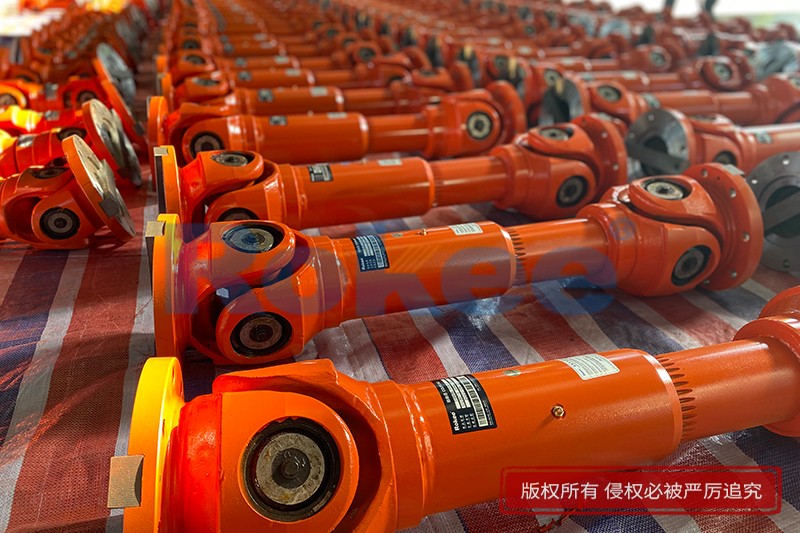
The steel manufacturing industry is a cornerstone of global infrastructure development, characterized by harsh operating conditions, high mechanical loads, and continuous production demands. Within the complex network of machinery that drives steel mills—from blast furnaces and converters to rolling mills and conveyor systems—power transmission components play a critical role in maintaining seamless operations. Among these components, SWC couplings stand out as indispensable elements, designed to address the unique challenges of steel production environments.
To understand the value of SWC couplings in steel mills, it is first essential to grasp their fundamental design and working principles. SWC couplings belong to the category of universal couplings, specifically engineered to transmit torque between two shafts that are not perfectly aligned. Unlike rigid couplings, which require precise coaxial alignment, SWC couplings accommodate three types of misalignment: angular misalignment (where the shafts intersect at an angle), parallel misalignment (where the shafts are offset parallel to each other), and axial displacement (where the shafts move along their axial direction). This versatility makes them ideal for steel mill applications, where thermal expansion, mechanical vibration, and structural shifts often cause shaft misalignment.
The core structure of an SWC coupling typically consists of two yokes, a cross shaft, and needle bearings. The yokes are connected to the driving and driven shafts, while the cross shaft links the two yokes, allowing for rotational movement across multiple planes. The needle bearings, positioned at the junctions of the cross shaft and yokes, reduce friction during rotation, enabling smooth torque transmission even under high loads. This robust design ensures that SWC couplings can withstand the heavy torque outputs required in steel mill processes, such as the rotation of rolling mill rolls or the operation of conveyor belts transporting raw materials and finished products.
One of the most notable attributes of SWC couplings is their high torque-carrying capacity, a feature that is paramount in steel manufacturing. Steel mill machinery, such as hot rolling mills and cold rolling mills, requires massive amounts of torque to process steel billets into sheets, bars, or coils. SWC couplings are engineered with high-strength materials, such as alloy steel, which undergo rigorous heat treatment to enhance hardness and durability. This material selection allows them to transmit torque ranging from several kilonewtons to hundreds of kilonewtons, making them suitable for both small-scale auxiliary equipment and large main drive systems in steel mills.
In addition to high torque capacity, SWC couplings excel in accommodating the extreme operating conditions prevalent in steel mills. Steel production involves high temperatures, with processes like hot rolling occurring at temperatures exceeding 1000°C. These high temperatures can cause thermal expansion of machinery components, leading to shaft misalignment. SWC couplings are designed to operate reliably at elevated temperatures, with heat-resistant materials and lubricants that prevent degradation under thermal stress. Furthermore, steel mills are dusty environments, with airborne particles such as iron oxide and coal dust posing a threat to mechanical components. SWC couplings are often equipped with protective covers to prevent dust ingress, ensuring that their internal mechanisms remain free from contamination and maintain optimal performance.
Vibration damping is another critical advantage of SWC couplings in steel mill applications. The operation of heavy machinery in steel mills generates significant vibration, which can cause premature wear and tear on equipment, reduce operational efficiency, and even lead to structural damage. SWC couplings absorb and dampen these vibrations, minimizing their transmission to other components in the power train. This vibration-damping capability not only extends the service life of the coupling itself but also protects other critical machinery, such as motors, gearboxes, and bearings, reducing maintenance costs and unplanned downtime.
The applications of SWC couplings in steel mills are diverse, covering almost every aspect of the production process. One of the primary applications is in rolling mill systems, which are responsible for shaping steel into various forms. Rolling mills consist of multiple rolls that rotate at high speeds to compress and flatten steel billets. The drive systems of these rolls require couplings that can transmit high torque while accommodating misalignment caused by thermal expansion and the mechanical forces exerted during rolling. SWC couplings are widely used in both hot and cold rolling mills, ensuring that power is efficiently transmitted from the motor to the rolls, even under the dynamic loads and misalignment conditions inherent in the rolling process.
Another key application of SWC couplings is in conveyor systems within steel mills. Conveyors are used to transport raw materials, such as iron ore and coal, to blast furnaces, and finished products, such as steel coils and bars, to storage or shipping areas. These conveyor systems often span long distances, with multiple drive units that require synchronized operation. SWC couplings are used to connect the motors and reducers of these drive units, accommodating misalignment caused by the installation of long conveyor frames and the vibration generated during material transport. Their ability to transmit torque reliably ensures that the conveyor systems operate smoothly, preventing material jams and ensuring continuous material flow throughout the mill.
SWC couplings also play a vital role in blast furnace systems, which are the heart of steel production. Blast furnaces convert iron ore into molten iron through a process of high-temperature reduction. The various components of blast furnaces, such as the charging system, the tuyere fan, and the slag discharge system, require power transmission components that can withstand high temperatures, heavy loads, and harsh environmental conditions. SWC couplings are used in these components to transmit torque between motors and mechanical systems, ensuring that the blast furnace operates continuously and efficiently. Their ability to accommodate misalignment and dampen vibration is particularly important in blast furnace applications, where unplanned downtime can result in significant production losses.
In addition to these primary applications, SWC couplings are used in a range of auxiliary equipment in steel mills, including pumps, fans, and compressors. These auxiliary systems are essential for maintaining the operational environment of the mill, such as providing cooling water, ventilating the production area, and supplying compressed air for various processes. SWC couplings ensure that these auxiliary systems operate reliably, even under the variable loads and misalignment conditions that can occur during their operation.
To maximize the performance and service life of SWC couplings in steel mills, proper maintenance is essential. Given the harsh operating conditions, regular inspection and maintenance are critical to prevent premature failure and ensure optimal performance. One of the key maintenance tasks is lubrication. The needle bearings and other moving parts of SWC couplings require regular lubrication to reduce friction and wear. In steel mill environments, high temperatures and dust can degrade lubricants, so it is important to use lubricants that are specifically formulated for high-temperature and high-load applications. Regular lubrication checks and replacements should be performed to ensure that the coupling components remain properly lubricated.
Another important maintenance task is the inspection of coupling components for wear and damage. Regular visual inspections should be conducted to check for signs of wear on the yokes, cross shaft, and needle bearings. This includes checking for cracks, deformation, and excessive play in the coupling components. In addition, alignment checks should be performed periodically to ensure that the shafts are within the allowable misalignment limits for the coupling. Misalignment beyond the specified limits can increase stress on the coupling components, leading to premature wear and failure. If misalignment is detected, corrective measures should be taken, such as adjusting the position of the motor or reducer.
The replacement of worn or damaged components is another critical aspect of SWC coupling maintenance. When components such as the cross shaft or needle bearings show signs of excessive wear or damage, they should be replaced promptly to prevent further damage to the coupling and other machinery components. It is important to use replacement components that meet the original specifications of the coupling to ensure that its performance and reliability are not compromised.
The selection of the right SWC coupling for a specific steel mill application is also crucial to ensure optimal performance. Several factors should be considered when selecting an SWC coupling, including the torque requirement, the operating speed, the type and amount of misalignment, the operating temperature, and the environmental conditions. It is important to choose a coupling that has a torque capacity that exceeds the maximum torque required by the application, to ensure that it can handle peak loads without failure. In addition, the coupling should be selected based on the maximum allowable misalignment of the application, to ensure that it can accommodate the misalignment that occurs during operation.
The future of SWC couplings in steel mills is closely tied to the ongoing modernization and automation of the steel manufacturing industry. As steel mills adopt more advanced technologies, such as digitalization and predictive maintenance, the demand for high-performance, reliable power transmission components like SWC couplings is expected to grow. Manufacturers of SWC couplings are continuously innovating to improve their performance, with advancements in material technology, such as the use of composite materials, and design improvements, such as optimized yoke and cross shaft geometries, to enhance torque capacity and reduce weight.
Furthermore, the trend towards energy efficiency in the steel industry is driving the development of more efficient SWC couplings. By reducing friction and improving torque transmission efficiency, these couplings can help steel mills reduce energy consumption, lowering operational costs and minimizing their environmental impact. This is particularly important in an era where sustainability is a key focus for industrial sectors worldwide.
In conclusion, SWC couplings are essential components in steel mills, playing a critical role in ensuring the reliable and efficient transmission of power in harsh operating conditions. Their ability to accommodate misalignment, transmit high torque, dampen vibration, and withstand high temperatures makes them ideal for a wide range of applications in steel production, from rolling mills and conveyor systems to blast furnaces and auxiliary equipment. Proper maintenance and selection of SWC couplings are key to maximizing their performance and service life, reducing maintenance costs and unplanned downtime. As the steel industry continues to evolve, SWC couplings will remain a vital part of its infrastructure, supporting the development of more efficient, sustainable, and automated steel manufacturing processes. The ongoing innovation in SWC coupling design and material technology will further enhance their capabilities, ensuring that they continue to meet the changing needs of the steel industry for years to come.
« SWC Couplings For Steel Mills » Post Date: 2023/10/8
URL: https://www.rokeecoupling.com/en/customer-cases/swc-couplings-for-steel-mills.html
- Flexible Diaphragm Coupling Working Principle
- Flexible Plum Couplings Connection Clearance
- Pin Bush Type Flexible Coupling Applications
- Motor Plum Coupling Enterprise
- Elastic Cylindrical Gear Coupling
- Procurement of Bushed Pin Flexible Coupling
- Brake Wheel Elastic Pin Couplings For Sale
- Grease of Curved Jaw Shaft Coupling
- Drum Coupling Function
- Intermediate Gear Coupling