Stainless Steel Double Diaphragm Coupling
Rokee® provide Stainless Steel Double Diaphragm Coupling, non-standard coupling customization, drawing design, batch processing, and export the product to your location.
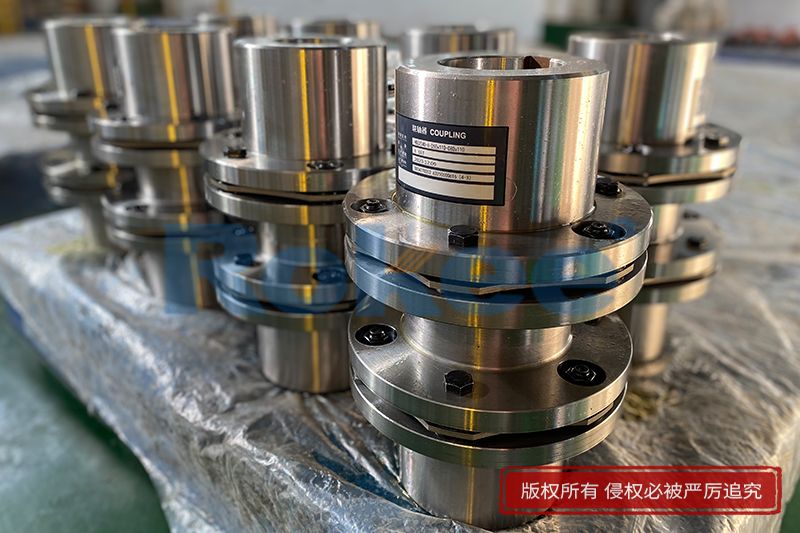
In the realm of mechanical power transmission, couplings serve as critical components that connect two shafts to transmit torque while accommodating various forms of misalignment. Among the diverse types of couplings available, the stainless steel double diaphragm coupling has emerged as a preferred choice in numerous industrial applications due to its unique combination of durability, precision, and resistance to harsh environments.
Fundamental Characteristics of Stainless Steel Double Diaphragm Couplings
Stainless steel double diaphragm couplings are mechanical devices designed to transmit torque between two coaxial shafts through a pair of flexible diaphragms. Unlike rigid couplings that require precise alignment, these couplings leverage the flexibility of the diaphragms to accommodate angular, parallel, and axial misalignments, thereby reducing stress on shafts, bearings, and other connected components. The core structure of a stainless steel double diaphragm coupling typically consists of two hubs, two diaphragm packs, and a middle spacer. The hubs are attached to the driving and driven shafts, while the diaphragm packs—composed of multiple thin stainless steel diaphragms—are bolted to the hubs and the spacer. This modular design not only enhances flexibility but also facilitates easy assembly and disassembly.
The use of stainless steel as the primary material for the diaphragms and other key components is a defining feature of these couplings. Stainless steel, known for its excellent corrosion resistance, high tensile strength, and good fatigue resistance, ensures that the coupling can operate reliably in challenging environments where exposure to moisture, chemicals, or extreme temperatures is common. The double diaphragm configuration, as opposed to a single diaphragm design, provides enhanced torque transmission capacity and greater misalignment compensation. Each diaphragm pack absorbs a portion of the misalignment, distributing the stress evenly and minimizing the risk of diaphragm failure. Additionally, stainless steel double diaphragm couplings operate without the need for lubrication, eliminating the possibility of lubricant leakage and reducing maintenance requirements.
Key Advantages of Stainless Steel Double Diaphragm Couplings
Stainless steel double diaphragm couplings offer a multitude of advantages over other types of couplings, making them suitable for a wide range of industrial applications. One of the most significant advantages is their exceptional corrosion resistance. Stainless steel contains chromium, which forms a passive oxide layer on the surface, protecting the material from rust and corrosion. This makes the couplings ideal for use in marine environments, chemical processing plants, food and beverage facilities, and other settings where exposure to corrosive substances is unavoidable. Unlike carbon steel couplings, which require additional coatings or treatments to resist corrosion, stainless steel double diaphragm couplings maintain their integrity without such modifications, reducing long-term costs.
Another key advantage is their high precision and torque transmission efficiency. The rigid connection between the hubs and diaphragms ensures that almost all of the torque from the driving shaft is transmitted to the driven shaft, with minimal power loss. This is particularly important in applications that require precise speed control and torque delivery, such as machine tools, robotics, and precision manufacturing equipment. Additionally, the double diaphragm design provides superior misalignment compensation compared to single diaphragm or flexible jaw couplings. It can accommodate angular misalignment up to 3 degrees, parallel misalignment up to 0.5 mm, and axial displacement up to several millimeters, depending on the coupling size and design. This flexibility reduces wear and tear on shafts and bearings, extending the service life of the entire mechanical system.
Stainless steel double diaphragm couplings also offer excellent fatigue resistance. The diaphragms are designed to flex repeatedly under load without permanent deformation or failure. The use of high-quality stainless steel, combined with precise manufacturing processes such as stamping or laser cutting, ensures that the diaphragms can withstand cyclic loading over an extended period. This is crucial in high-speed applications, where the coupling is subjected to frequent changes in torque and speed. Furthermore, since these couplings do not require lubrication, they eliminate the risk of lubricant contamination, which is essential in clean environments such as pharmaceutical manufacturing facilities and semiconductor plants. They also operate with low noise and vibration, contributing to a quieter and more stable working environment.
Wide-Ranging Applications of Stainless Steel Double Diaphragm Couplings
Due to their unique combination of advantages, stainless steel double diaphragm couplings are widely used in various industries and applications. One of the primary application areas is the industrial machinery sector, including machine tools, such as lathes, milling machines, and grinding machines. In these applications, precise torque transmission and misalignment compensation are critical to ensuring the accuracy of machining operations. The stainless steel construction also makes the couplings suitable for use in harsh machining environments where coolants and cutting fluids are present.
The automotive and aerospace industries also rely heavily on stainless steel double diaphragm couplings. In the automotive sector, they are used in transmission systems, engine test benches, and electric vehicle drivetrains. The high torque capacity and corrosion resistance make them ideal for these applications, where reliability and performance are paramount. In the aerospace industry, the couplings are used in aircraft engines, auxiliary power units, and flight control systems. The lightweight nature of stainless steel, combined with its high strength, makes it suitable for aerospace applications where weight reduction is a key consideration.
Another important application area is the chemical and petrochemical industry. In chemical processing plants, couplings are exposed to a wide range of corrosive chemicals, high temperatures, and high pressures. Stainless steel double diaphragm couplings can withstand these harsh conditions, ensuring reliable operation of pumps, compressors, and agitators. Similarly, in the oil and gas industry, they are used in drilling equipment, pipelines, and offshore platforms, where resistance to saltwater corrosion and extreme weather conditions is essential.
The food and beverage industry also benefits from the use of stainless steel double diaphragm couplings. These couplings are easy to clean and sanitize, making them suitable for use in processing equipment such as mixers, conveyors, and pumps. The corrosion resistance of stainless steel prevents contamination of food products by rust or other metallic particles, ensuring compliance with strict food safety standards. Additionally, the pharmaceutical and semiconductor industries use these couplings in cleanroom environments, where low contamination and high precision are required.
Selection Criteria for Stainless Steel Double Diaphragm Couplings
Selecting the right stainless steel double diaphragm coupling for a specific application requires careful consideration of several key factors. The first and most important factor is the torque requirement. The coupling must be capable of transmitting the maximum torque generated by the driving shaft without exceeding its rated torque capacity. It is essential to calculate the peak torque, including any shock loads or transient torques, to ensure that the coupling can handle the worst-case operating conditions.
Another critical factor is the misalignment type and magnitude. Different applications have different levels of angular, parallel, and axial misalignment. It is important to select a coupling that can accommodate the maximum misalignment expected in the application. The coupling manufacturer's specifications should be consulted to determine the maximum allowable misalignment for each type.
The operating speed is also an important consideration. High-speed applications require couplings with good dynamic balance to minimize vibration and noise. Stainless steel double diaphragm couplings are typically dynamically balanced to ISO standards, but it is important to select a coupling with the appropriate balance grade for the application. Additionally, the operating temperature range must be considered. While stainless steel can withstand a wide range of temperatures, extreme high or low temperatures may affect the flexibility and strength of the diaphragms. The coupling should be selected to ensure that it can operate reliably within the application's temperature range.
The shaft diameter is another key factor. The coupling hubs must be compatible with the diameters of the driving and driven shafts. It is important to select a coupling with hub sizes that match the shaft diameters, or to use adapter sleeves if necessary. Additionally, the mounting configuration, such as keyway, set screw, or hydraulic mounting, should be considered based on the application's requirements for ease of installation and torque transmission.
Finally, the environmental conditions must be taken into account. If the coupling will be exposed to corrosive substances, high humidity, or extreme temperatures, it is important to select a stainless steel grade that is suitable for those conditions. For example, 316 stainless steel is more corrosion-resistant than 304 stainless steel and is better suited for harsh chemical environments. Other environmental factors, such as dust, dirt, and vibration, may also influence the selection of the coupling.
Maintenance Practices for Stainless Steel Double Diaphragm Couplings
Although stainless steel double diaphragm couplings require less maintenance than lubricated couplings, proper maintenance is still essential to ensure their long-term reliability and performance. One of the most important maintenance practices is regular inspection. The coupling should be inspected periodically for signs of wear, damage, or misalignment. This includes checking the diaphragms for cracks, tears, or fatigue damage, inspecting the bolts and nuts for tightness, and verifying that the hubs are properly aligned with the shafts.
Cleaning is another important maintenance task, especially in applications where the coupling is exposed to dust, dirt, or corrosive substances. The coupling should be cleaned regularly using a mild detergent and water, followed by drying to prevent the buildup of contaminants. In harsh environments, such as chemical processing plants, it may be necessary to use specialized cleaning agents that are compatible with stainless steel.
Proper alignment of the shafts is critical to the performance and service life of the coupling. Misalignment beyond the coupling's allowable limits can cause excessive stress on the diaphragms, leading to premature failure. It is recommended to check the shaft alignment periodically using laser alignment tools or dial indicators, and to make any necessary adjustments to ensure that the alignment is within the specified limits.
In addition to regular inspection and cleaning, it is important to replace any damaged components promptly. If cracks or tears are found in the diaphragms, they should be replaced immediately to prevent torque loss or complete coupling failure. The bolts and nuts should also be replaced if they show signs of wear or corrosion. When replacing components, it is important to use genuine parts from the coupling manufacturer to ensure compatibility and performance.
Finally, it is important to follow the manufacturer's recommended maintenance schedule and guidelines. The manufacturer's manual will provide specific information on the frequency of inspections, cleaning procedures, alignment requirements, and component replacement intervals. Adhering to these guidelines will help to maximize the service life of the coupling and minimize the risk of unexpected failures.
Conclusion
Stainless steel double diaphragm couplings are essential components in modern mechanical power transmission systems, offering a unique combination of corrosion resistance, precision, flexibility, and low maintenance requirements. Their ability to transmit torque efficiently while accommodating various forms of misalignment makes them suitable for a wide range of industrial applications, from machine tools and automotive systems to chemical processing plants and food production facilities. By understanding the fundamental characteristics, key advantages, applications, selection criteria, and maintenance practices of these couplings, engineers and maintenance professionals can select and use them effectively, ensuring the reliability and performance of the mechanical systems they serve.
As industrial technology continues to advance, the demand for high-performance, reliable couplings is expected to grow. Stainless steel double diaphragm couplings, with their superior properties and versatility, are well-positioned to meet this demand, playing an increasingly important role in the development of more efficient and durable mechanical systems. Whether in harsh environments, precision applications, or cleanroom settings, these couplings continue to prove their value as a critical component in power transmission.
« Stainless Steel Double Diaphragm Coupling » Post Date: 2025/12/2
URL: https://www.rokeecoupling.com/en/customer-cases/stainless-steel-double-diaphragm-coupling.html
- Axial Stress Of Universal Joint Coupling
- JMI Single Diaphragm Coupling
- Toothed Coupling Flange
- Vertical Installation Gear Couplings
- Disadvantages of Brake Drum Coupling
- Large Universal Joint
- Specifications of Disc Coupling
- Rolling Steel Drum Tooth Universal Shaft
- Tire Coupling Supplier
- Compensation Amount Of Drum Gear Coupling