JS Grid Couplings
Rokee® provide JS Grid Couplings, non-standard coupling customization, drawing design, batch processing, and export the product to your location.
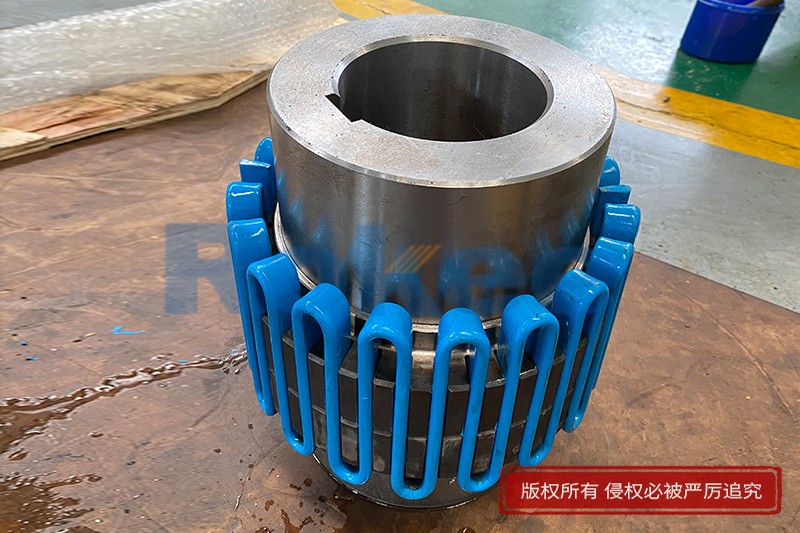
In the realm of mechanical power transmission systems, couplings serve as critical components that bridge rotating shafts, enabling torque transfer while accommodating misalignments, absorbing vibrations, and protecting downstream equipment. Among the diverse array of coupling types, the JS Grid Coupling has emerged as a versatile and reliable solution, widely adopted in industrial machinery, automotive systems, and renewable energy equipment. Characterized by its unique grid-shaped elastic element, this coupling integrates the advantages of rigid and flexible couplings, striking a balance between torque capacity, misalignment compensation, and service life.
1. Design Principles of JS Grid Couplings
The JS Grid Coupling is a type of flexible coupling composed of three core components: two hubs (input and output), a grid element, and optional side covers or seals. The design philosophy revolves around utilizing the elastic deformation of the grid element to achieve torque transmission and misalignment accommodation, while the hubs provide a rigid connection to the driving and driven shafts. Unlike rigid couplings that require precise alignment, or fully flexible couplings that may sacrifice torque capacity, the JS Grid Coupling’s modular design ensures both reliability and adaptability.
1.1 Core Component Design
The hubs of JS Grid Couplings are typically manufactured from high-strength alloy steels or ductile iron, materials selected for their excellent tensile strength, wear resistance, and machinability. The inner bore of each hub is designed with keyways, splines, or interference fits to ensure a secure connection with the shafts, preventing slippage during high-torque operation. The outer surface of the hubs features a circumferential groove or teeth structure that mates with the grid element, creating a meshing relationship that enables torque transfer. The geometry of the hub’s mating surface is precisely machined to ensure uniform contact with the grid, distributing stress evenly and avoiding localized wear.
The grid element, the defining feature of the JS Grid Coupling, is usually made of spring steel or stainless steel with high elastic limit and fatigue resistance. Its grid-shaped structure—typically formed by stamping, forging, or wire drawing processes—provides multiple points of contact with the hubs, allowing for elastic deformation under load. The grid’s design is optimized to balance flexibility and rigidity: during normal operation, it maintains sufficient stiffness to transmit torque efficiently; when misalignments occur or vibrations are present, it deforms elastically to absorb shocks and compensate for positional deviations. The grid element’s cross-sectional shape, whether rectangular, circular, or trapezoidal, is tailored to specific application requirements, with trapezoidal grids offering higher torque capacity and rectangular grids providing better vibration absorption.
Optional components such as side covers and seals are integrated into the design to protect the internal components from contaminants such as dust, moisture, and lubricating oil leakage. Side covers are typically bolted to the hubs, forming a closed cavity that houses the grid element. Seals—such as oil seals or O-rings—are installed between the hubs and side covers to prevent lubricant loss and inhibit the ingress of foreign particles, which can accelerate wear and reduce the coupling’s service life.
1.2 Torque Transmission Mechanism
The torque transmission process of the JS Grid Coupling begins with the driving shaft rotating the input hub. The meshing between the input hub’s teeth and the grid element converts the rotational motion of the hub into a pulling force on the grid, which then transmits this force to the output hub through its meshing with the output hub’s teeth. The grid element’s elastic deformation plays a crucial role in this process: as torque is applied, the grid stretches slightly, ensuring that the load is distributed across all grid strands, rather than concentrated on a single point. This distributed load-bearing characteristic not only enhances the coupling’s torque capacity but also reduces the risk of fatigue failure.
Compared to other flexible couplings, such as rubber jaw couplings or disc couplings, the JS Grid Coupling’s torque transmission mechanism offers distinct advantages. Rubber jaw couplings rely on the compression of rubber elements, which are prone to aging and deformation under high temperatures or long-term use, limiting their service life. Disc couplings use thin metal discs for torque transmission, which have high rigidity but limited misalignment compensation capacity. In contrast, the grid element’s elastic stretching mechanism provides stable torque transmission over a wide range of operating conditions, with better resistance to high temperatures and fatigue.
2. Functional Advantages of JS Grid Couplings
The JS Grid Coupling’s design imparts several key functional advantages that make it suitable for a wide range of industrial applications. These advantages include excellent misalignment compensation, effective vibration absorption, high torque capacity, long service life, and ease of maintenance.
2.1 Misalignment Compensation
One of the most significant advantages of JS Grid Couplings is their ability to compensate for multiple types of shaft misalignments, including angular misalignment, parallel misalignment, and axial displacement. Angular misalignment occurs when the axes of the driving and driven shafts are not collinear but intersect at a point; parallel misalignment refers to shafts that are parallel but offset from each other; axial displacement is the linear movement of one shaft relative to the other along the axial direction.
The grid element’s elastic deformation enables it to accommodate these misalignments without generating excessive stress on the shafts or bearings. For angular misalignment, the grid bends slightly to adapt to the angle between the hubs, maintaining uniform contact with both hubs. For parallel misalignment, the grid stretches asymmetrically, bridging the offset between the shafts. For axial displacement, the grid’s length changes elastically, absorbing the linear movement. Typically, JS Grid Couplings can compensate for angular misalignment up to 1.5°–3°, parallel misalignment up to 0.2–0.5 mm, and axial displacement up to 5–15 mm, depending on the coupling size and grid material. This misalignment compensation capability reduces the need for precise shaft alignment during installation, simplifying the assembly process and reducing maintenance costs.
2.2 Vibration Absorption and Shock Damping
In industrial machinery, vibrations generated by rotating components can cause noise, accelerate equipment wear, and even lead to structural damage. The JS Grid Coupling’s grid element acts as a natural vibration absorber, utilizing its elastic deformation to absorb and dissipate vibrational energy. When the driving shaft experiences torsional vibrations or shock loads—such as those caused by startup, shutdown, or sudden load changes—the grid element stretches and contracts elastically, converting the kinetic energy of vibrations into thermal energy, which is then dissipated into the surrounding environment.
This shock damping capability is particularly beneficial in applications such as reciprocating compressors, pumps, and crushers, where intermittent or pulsating loads are common. By reducing the transmission of vibrations to downstream equipment, the JS Grid Coupling protects gears, bearings, and other precision components, extending their service life and improving the overall stability of the power transmission system. Compared to rigid couplings, which transmit vibrations directly, the JS Grid Coupling can reduce vibration amplitude by 30%–50% in typical industrial applications.
2.3 High Torque Capacity and Reliability
Despite its flexible nature, the JS Grid Coupling offers impressive torque capacity, making it suitable for high-power applications. The grid element’s multiple contact points with the hubs distribute the torque evenly, reducing stress concentration and enabling the coupling to handle high torque loads. The use of high-strength materials for the hubs and grid element further enhances torque capacity; for example, a medium-sized JS Grid Coupling with a grid made of spring steel can transmit torque ranging from 50 N·m to 5000 N·m, depending on its size and design.
The reliability of the JS Grid Coupling is also enhanced by its resistance to harsh operating conditions. The grid element’s material selection—such as stainless steel for corrosive environments—ensures compatibility with a wide range of industrial settings, including high-temperature, high-humidity, and dusty environments. Additionally, the closed design with seals prevents contamination, reducing wear and extending the coupling’s service life. Under normal operating conditions and proper maintenance, JS Grid Couplings can achieve a service life of 5000–10000 operating hours, significantly longer than rubber-based flexible couplings.
2.4 Ease of Maintenance and Replacement
The modular design of JS Grid Couplings simplifies maintenance and replacement procedures. Unlike integral couplings that require disassembly of the entire shaft system, the JS Grid Coupling’s grid element can be replaced without removing the hubs from the shafts. This is achieved by removing the side covers, extracting the worn grid element, and installing a new one— a process that can be completed in a short time with basic tools. This ease of maintenance minimizes downtime, a critical factor in industrial production where equipment availability directly impacts productivity.
3. Key Performance Parameters and Selection Criteria
Selecting the appropriate JS Grid Coupling for a specific application requires consideration of several key performance parameters, including torque capacity, speed limit, misalignment range, operating temperature, and shaft diameter. Understanding these parameters is essential to ensure optimal performance, reliability, and service life.
3.1 Key Performance Parameters
Torque capacity is the maximum torque that the coupling can transmit without permanent deformation or failure. It is typically specified as the nominal torque (for continuous operation) and the peak torque (for short-term overloads). When selecting a coupling, the nominal torque should be greater than the maximum operating torque of the system, with a safety factor of 1.2–1.5 to account for overloads, startup shocks, and other unexpected loads.
Speed limit refers to the maximum rotational speed at which the coupling can operate safely, determined by the centrifugal force generated by the rotating components. Exceeding the speed limit can cause excessive vibration, wear, or even structural failure. JS Grid Couplings typically have a speed limit ranging from 3000 rpm to 15000 rpm, depending on the size and material of the hubs and grid element.
Misalignment range, as discussed earlier, includes angular, parallel, and axial misalignment capabilities. The selected coupling must be able to accommodate the maximum misalignment expected in the application, which may result from installation errors, thermal expansion, or shaft deflection during operation.
Operating temperature range is determined by the material properties of the grid element and seals. Spring steel grid elements typically have a maximum operating temperature of 120°C, while stainless steel grids can withstand temperatures up to 200°C. Seals may have lower temperature limits, so it is important to ensure that the coupling’s temperature rating matches the application’s operating environment.
Shaft diameter compatibility is another critical parameter, as the hubs must fit the driving and driven shafts. Manufacturers typically offer JS Grid Couplings with a range of bore sizes, and custom hubs can be manufactured for non-standard shaft diameters.
3.2 Selection Criteria
The selection process should begin with a detailed analysis of the application’s requirements, including the type of machinery, power rating, operating speed, misalignment sources, and environmental conditions. The following steps outline a systematic approach to selecting a JS Grid Coupling:
1. Calculate the maximum operating torque of the system, including the rated torque of the motor or engine, and any additional torque from loads or startup conditions.
2. Determine the maximum operating speed and ensure that the selected coupling’s speed limit exceeds this value.
3. Measure or estimate the maximum misalignment (angular, parallel, axial) expected during operation and select a coupling that can accommodate these values.
4. Consider the operating environment, including temperature, humidity, corrosive substances, and dust, to select appropriate materials for the hubs, grid element, and seals.
5. Verify that the coupling’s bore size matches the shaft diameters of the driving and driven equipment. If necessary, opt for custom hubs or adapter sleeves.
6. Evaluate the maintenance requirements and select a coupling with easy-to-replace components if downtime is a critical concern.
4. Industrial Applications of JS Grid Couplings
Due to their versatile performance characteristics, JS Grid Couplings find applications across a wide range of industries, from traditional manufacturing to emerging renewable energy sectors. Their ability to transmit high torque, compensate for misalignments, and absorb vibrations makes them suitable for both heavy-duty and precision machinery.
4.1 Manufacturing and Processing Machinery
In the manufacturing industry, JS Grid Couplings are widely used in machine tools, conveyors, mixers, and extruders. Machine tools—such as lathes, milling machines, and grinders—require precise torque transmission and vibration damping to ensure machining accuracy. The JS Grid Coupling’s ability to absorb vibrations caused by cutting forces helps maintain the stability of the tool and workpiece, improving surface finish and dimensional accuracy. Conveyors, which are used to transport materials in factories and warehouses, often experience misalignments due to long shaft lengths and uneven loading. The JS Grid Coupling’s misalignment compensation capability ensures smooth operation, reducing wear on conveyor rollers and motors.
Mixers and extruders, common in the food processing, chemical, and plastic industries, operate under high torque and pulsating loads. The JS Grid Coupling’s high torque capacity and shock damping performance protect the drive system from damage caused by these loads, ensuring continuous and reliable operation. Additionally, the coupling’s sealed design prevents contamination of the processed materials by lubricants or foreign particles, meeting hygiene requirements in the food and pharmaceutical industries.
4.2 Automotive and Transportation Systems
In the automotive sector, JS Grid Couplings are used in drive shafts, transmission systems, and auxiliary equipment such as water pumps and alternators. In commercial vehicles—such as trucks and buses— the drive shaft experiences significant misalignments due to suspension movement and load changes. The JS Grid Coupling’s ability to compensate for these misalignments ensures efficient torque transmission from the engine to the wheels, improving fuel efficiency and reducing wear on the transmission system.
Auxiliary equipment such as water pumps and alternators operate at high speeds and require reliable vibration damping to prevent premature failure. The JS Grid Coupling’s compact design and high-speed capability make it suitable for these applications, ensuring stable operation and extending the service life of the equipment. Additionally, the coupling’s resistance to high temperatures makes it compatible with the under-hood environment, where temperatures can exceed 100°C.
4.3 Renewable Energy Equipment
The renewable energy sector—particularly wind and solar power—has seen increasing adoption of JS Grid Couplings due to their reliability and adaptability. In wind turbines, the coupling connects the rotor shaft to the gearbox or directly to the generator, transmitting torque from the rotating blades to the power generation system. Wind turbines operate in harsh outdoor environments, with significant misalignments caused by wind-induced vibrations and structural deflection. The JS Grid Coupling’s misalignment compensation and vibration absorption capabilities ensure stable operation, protecting the gearbox and generator from damage.
In solar thermal power systems, JS Grid Couplings are used in pumps and fans that circulate heat transfer fluids and cool the power generation equipment. These systems often operate in high-temperature environments, and the coupling’s high-temperature resistance ensures reliable performance. Additionally, the coupling’s low maintenance requirements are beneficial in remote solar power plants, where access for maintenance is limited.
4.4 Heavy-Duty Industrial Equipment
In heavy industries such as mining, construction, and metallurgy, JS Grid Couplings are used in crushers, grinders, conveyors, and rolling mills. Crushers and grinders operate under extremely high torque and shock loads, requiring couplings with high torque capacity and excellent shock damping. The JS Grid Coupling’s grid element absorbs the impact of material crushing, protecting the motor and gearbox from damage. Rolling mills in the metallurgical industry require precise torque transmission to ensure uniform rolling of metal sheets and bars. The JS Grid Coupling’s ability to maintain torque stability while compensating for minor misalignments ensures consistent product quality.
5. Future Development Trends of JS Grid Couplings
With the continuous advancement of industrial technology, the demand for more efficient, reliable, and intelligent power transmission components is growing. JS Grid Couplings are evolving to meet these demands, with several key development trends emerging in material science, design optimization, and intelligent monitoring.
5.1 Advanced Material Applications
The development of new materials is expected to enhance the performance of JS Grid Couplings. High-performance alloys, such as titanium alloys and composite materials, offer higher strength-to-weight ratios than traditional steels, enabling the design of lighter and more compact couplings with increased torque capacity. Composite materials, in particular, have excellent corrosion resistance and vibration damping properties, making them suitable for harsh environments such as offshore wind turbines and marine applications. Additionally, the use of shape memory alloys for the grid element may enable self-healing capabilities, allowing the coupling to recover from minor deformations and extend service life.
5.2 Design Optimization Using Simulation Technology
Advances in finite element analysis (FEA) and computational fluid dynamics (CFD) are enabling more precise design optimization of JS Grid Couplings. Engineers can use FEA to simulate the stress distribution, elastic deformation, and fatigue life of the coupling components under various operating conditions, optimizing the geometry of the hubs and grid element to reduce weight and improve performance. CFD simulations can be used to analyze the flow of lubricants and coolants within the coupling, improving heat dissipation and reducing wear. This data-driven design approach ensures that JS Grid Couplings are tailored to specific application requirements, maximizing efficiency and reliability.
5.3 Integration of Intelligent Monitoring Systems
The trend toward industrial automation and the Industrial Internet of Things (IIoT) is driving the integration of intelligent monitoring systems into JS Grid Couplings. Sensors embedded in the coupling can monitor key performance parameters such as torque, temperature, vibration, and misalignment in real time. This data is transmitted to a central control system, enabling predictive maintenance—identifying potential failures before they occur and scheduling maintenance activities to minimize downtime. For example, vibration sensors can detect abnormal wear of the grid element, while temperature sensors can alert operators to overheating caused by insufficient lubrication or excessive load. This intelligent monitoring capability improves the reliability and operational efficiency of the power transmission system, reducing maintenance costs and extending equipment life.
5.4 Environmental Sustainability
Environmental sustainability is becoming a key consideration in the design and manufacturing of mechanical components. JS Grid Couplings are being developed with more environmentally friendly materials and processes, such as recycled steels and water-based lubricants. Additionally, the extended service life and easy maintenance of JS Grid Couplings reduce the need for frequent replacement, minimizing waste generation. In renewable energy applications, the coupling’s role in improving the efficiency of wind and solar power systems contributes to reducing carbon emissions, aligning with global efforts to combat climate change.
6. Conclusion
The JS Grid Coupling has established itself as a critical component in mechanical power transmission systems, offering a unique combination of torque capacity, misalignment compensation, vibration absorption, and reliability. Its modular design, ease of maintenance, and versatility make it suitable for a wide range of industrial applications, from traditional manufacturing to emerging renewable energy sectors. The design principles of the JS Grid Coupling—centered on the elastic grid element—enable it to bridge the gap between rigid and flexible couplings, providing an optimal balance of performance and adaptability.
As industrial technology continues to advance, JS Grid Couplings are evolving to meet the demands of more efficient, reliable, and sustainable power transmission systems. Advances in materials, design optimization, and intelligent monitoring are expected to further enhance the performance and functionality of these couplings, expanding their applications and improving their contribution to industrial productivity. By understanding the design principles, functional advantages, and selection criteria of JS Grid Couplings, engineers and manufacturers can leverage this component to optimize their power transmission systems, ensuring reliable and efficient operation.
In summary, the JS Grid Coupling is a testament to the innovation in mechanical engineering, combining simplicity of design with high performance. Its continued development and adoption will play a vital role in supporting the growth of diverse industries, driving efficiency, and promoting sustainability in the global industrial landscape.
« JS Grid Couplings » Post Date: 2023/10/11
URL: https://www.rokeecoupling.com/en/customer-cases/js-grid-couplings.html
- Design Standard For Curved-tooth Gear Couplings
- Flexible Diaphragm Coupling Drawing
- Plum Blossom Coupling With Cone Sleeve
- Automation Claw Couplings
- Diaphragm Coupling With Brake Wheel
- Flexible Plum Blossom Couplings Supplier
- Universal Joint Shaft Structure Diagram
- Disadvantages of Flexible Jaw Coupling
- Brake Wheel Nylon Pin Couplings
- WGT Drum Gear Coupling