Industrial Universal Coupling
Rokee® is a Industrial Universal Coupling Supplier from China, customized industrial universal coupling according to the drawings which provided by the customer, selling chinese national standard industrial universal coupling, support export, due to excellent quality, complete technical services and superior cost performance, Rokee® industrial coupling have been serving more than 60 countries and regions in the world, effectively operating in many corners of the world.
The Cardan Universal Coupling uses cross bearings to connect the flanges at both ends, which can transmit torque that is not on the same axis. The diagonal compensation can reach more than 25°, and the spline connection can compensate for the axial displacement in a large distance. With high carrying capacity and excellent transmission efficiency, it is widely used in modern industrial fields.
SWC Universal Shaft adopts integrated fork head layout, with the rotary diameter of 1600mm and torque transmission distance of more than 30m. It is widely used in steel rolling machinery, crane transport machinery and other heavy equipment fields.
SWP Universal Coupling adopts integrated fork head layout. Similar to the use of the SWC universal coupling, it is mainly used in the field of heavy-duty large equipment, with a rotary diameter of up to 1200mm.
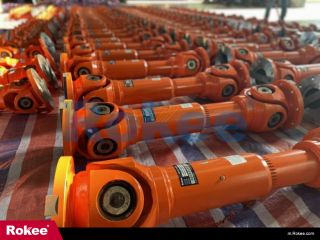


Our Universal Joint Couplings are widely used and have many impressive records. From micro products for modern logistics, artificial intelligence machinery, light products used in the paper industry, high speed and high performance products for engineering and railway vehicles, to super heavy duty products used in metallurgical rolling system systems, Rokee has won us with mature products and quality Long-term trust of customers, widely exported to Europe, America and other parts of the world.
All standard Cardan Couplings of Rokee are optimized design products based on the combination of decades of experience and computer design technology.,The products we are proud of are not only different from the national technical standards of China but also the standards of other manufacturers in the world. Unique design ideas and make perfection more perfect sprit drive our products find a better balance between lower price and rotational and transmission torque performance.
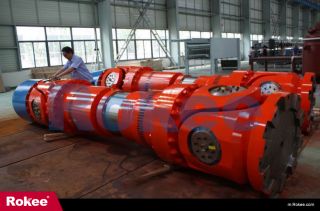
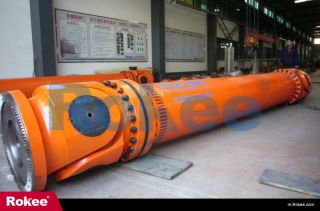

Rokee's standardized products also mean faster delivery and easier spare parts availability as well as quick maintenance service.
The Cardan Shaft products used in important equipment and core industrial fields have not only undergone careful design, but also comprehensive torque, stiffness, balance performance and life tests.
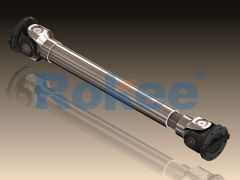
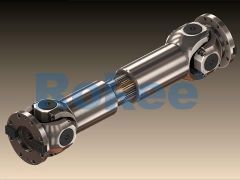
![Industrial Universal Coupling,SWC-BH Standard Telescopic Welded Universal Coupling]()
SWC-BH Standard Telescopic Welded Universal Coupling
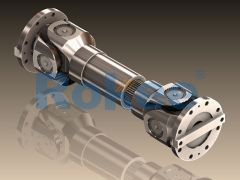
SWC-BH Universal Coupling adopts integrated fork head layout, with the rotary diameter of 1600mm and torque transmission distance of more than 30m. SWC-BH Cardan Shaft is widely used in steel rolling machinery, crane transport machinery and other heavy equipment fields.![Industrial Universal Coupling,SWC-CH Long Telescopic Welded Universal Coupling]()
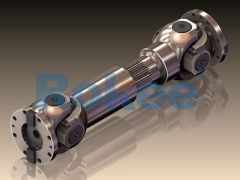
SWC-CH Long Telescopic Welded Universal Coupling
SWC-CH Universal Coupling adopts integrated fork head layout, with the rotary diameter of 1600mm and torque transmission distance of more than 30m. SWC-CH Cardan Shaft is widely used in steel rolling machinery, crane transport machinery and other heavy equipment fields.![Industrial Universal Coupling,SWC-DH Short Telescopic Welded Universal Coupling]()
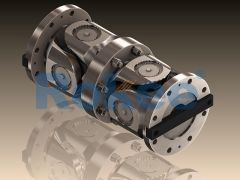
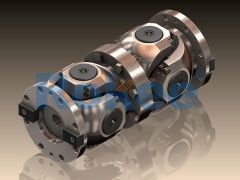
SWC-DH Short Telescopic Welded Universal Coupling
SWC-DH Universal Coupling adopts integrated fork head layout, with the rotary diameter of 1600mm and torque transmission distance of more than 30m. SWC-DH Cardan Shaft is widely used in steel rolling machinery, crane transport machinery and other heavy equipment fields.![Industrial Universal Coupling,SWC-WD Non-telescopic Short Universal Coupling]()
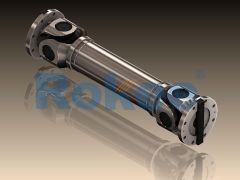
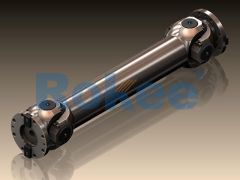
SWC-WD Non-telescopic Short Universal Coupling
SWC-WD Universal Coupling adopts integrated fork head layout, with the rotary diameter of 1600mm and torque transmission distance of more than 30m. SWC-WD Cardan Shaft is widely used in steel rolling machinery, crane transport machinery and other heavy equipment fields.![Industrial Universal Coupling,SWC-WH Non-telescopic Welded Universal Coupling]()
SWC-WH Non-telescopic Welded Universal Coupling
SWC-WH Universal Coupling adopts integrated fork head layout, with the rotary diameter of 1600mm and torque transmission distance of more than 30m. SWC-WH Cardan Shaft is widely used in steel rolling machinery, crane transport machinery and other heavy equipment fields.![Industrial Universal Coupling,SWP-A Universal Coupling]()
SWP-A Universal Coupling
SWP-A Universal Coupling adopts integrated fork head layout. Similar to the use of the SWC universal coupling, SWP-A Cardan Shaft is mainly used in the field of heavy-duty large equipment, with a rotary diameter of up to 1200mm.![Industrial Universal Coupling,SWP-B Universal Coupling]()
SWP-B Universal Coupling
SWP-B Universal Coupling adopts integrated fork head layout. Similar to the use of the SWC universal coupling, SWP-B Cardan Shaft is mainly used in the field of heavy-duty large equipment, with a rotary diameter of up to 1200mm.![Industrial Universal Coupling,SWP-C Universal Coupling]()
SWP-C Universal Coupling
SWP-C Universal Coupling adopts integrated fork head layout. Similar to the use of the SWC universal coupling, SWP-C Cardan Shaft is mainly used in the field of heavy-duty large equipment, with a rotary diameter of up to 1200mm.![Industrial Universal Coupling,SWP-D Universal Coupling]()
SWP-D Universal Coupling
SWP-D Universal Coupling adopts integrated fork head layout. Similar to the use of the SWC universal coupling, SWP-D Cardan Shaft is mainly used in the field of heavy-duty large equipment, with a rotary diameter of up to 1200mm.
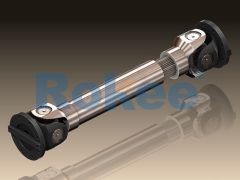
In the intricate network of industrial machinery, power transmission components serve as the vital links that ensure the seamless conversion and transfer of mechanical energy. Among these components, the industrial universal coupling stands out as a versatile and indispensable device, designed to accommodate misalignments between rotating shafts while transmitting torque efficiently. From heavy-duty manufacturing plants to precision automation systems, universal couplings play a critical role in maintaining operational stability, reducing wear and tear, and optimizing overall system performance.
1. Fundamentals of Industrial Universal Couplings
At its core, an industrial universal coupling is a mechanical component used to connect two shafts that are not perfectly aligned, enabling the transmission of rotational motion and torque between them. Unlike rigid couplings, which require precise coaxial alignment, universal couplings are engineered to tolerate three main types of misalignment: angular misalignment (where the shafts intersect at an angle), parallel misalignment (where the shafts are offset parallel to each other), and axial misalignment (where the shafts move along their axial direction). This unique capability makes them essential in applications where shaft alignment is challenging due to installation constraints, thermal expansion, or structural deflection.
The basic operating principle of a universal coupling revolves around the use of hinged joints that allow relative movement between the connected shafts. A typical universal coupling consists of two yokes (fork-shaped components) attached to the ends of the shafts, and a cross-shaped intermediate member (known as a cross or spider) that connects the yokes. The cross features four trunnions (cylindrical projections) that fit into bearings within the yokes, enabling the yokes to rotate at different angles relative to each other. As one shaft rotates, the cross transfers the rotational force to the other yoke, ensuring that torque is transmitted even when the shafts are misaligned.
It is important to note that a single universal coupling (often referred to as a single Cardan joint, named after the 16th-century mathematician Girolamo Cardano) introduces a degree of velocity fluctuation. This is because the angular velocity of the driven shaft varies periodically as the joint rotates, especially at large angular misalignments. To mitigate this issue, industrial applications often use double universal couplings (or double Cardan joints), which consist of two single joints connected by an intermediate shaft. The arrangement of the yokes in a double universal coupling ensures that the velocity fluctuations from the first joint are canceled out by the second, resulting in a constant angular velocity of the driven shaft.
2. Key Types of Industrial Universal Couplings
Industrial universal couplings are available in a variety of designs, each tailored to specific application requirements such as torque capacity, misalignment tolerance, operating speed, and environmental conditions. The following are the most common types used in industrial settings:
2.1 Single Cardan Universal Coupling
The single Cardan coupling is the simplest type of universal coupling, consisting of two yokes and a single cross. It is widely used in applications where angular misalignment is relatively small (typically up to 15 degrees) and velocity fluctuation is acceptable. This type of coupling is compact, lightweight, and cost-effective, making it suitable for low to medium torque applications such as small pumps, fans, and conveyors. However, due to its velocity fluctuation limitation, it is not recommended for high-speed or precision applications where constant rotational speed is critical.
2.2 Double Cardan Universal Coupling
As mentioned earlier, the double Cardan coupling addresses the velocity fluctuation issue of the single Cardan design by incorporating two cross joints and an intermediate shaft. The yokes of the two joints are aligned in a specific orientation (usually 90 degrees relative to each other) to ensure that the angular velocity variations are compensated. This design allows for larger angular misalignments (up to 30 degrees) and provides a constant velocity output, making it ideal for high-speed, high-torque applications such as automotive drivetrains, industrial gearboxes, and precision machining equipment. The double Cardan coupling is more complex and costly than the single type but offers superior performance in demanding environments.
2.3 Constant Velocity (CV) Universal Coupling
The constant velocity (CV) coupling is a specialized type of universal coupling that eliminates velocity fluctuation entirely, even at large angular misalignments (up to 40 degrees or more). Unlike Cardan joints, which rely on cross trunnions, CV couplings use alternative mechanisms such as ball bearings, tripod joints, or Rzeppa joints to transmit torque at a constant velocity. The Rzeppa CV joint, for example, consists of an inner race, an outer race, and a set of steel balls held in place by a cage. The curved grooves in the inner and outer races are designed such that the balls always lie in the plane that bisects the angle between the input and output shafts, ensuring constant velocity transmission.
CV couplings are widely used in applications where precision and smooth operation are paramount, such as robotics, aerospace systems, medical equipment, and high-performance industrial machinery. They are also commonly found in automotive applications, particularly in front-wheel-drive vehicles, where they accommodate the movement of the drive wheels while maintaining constant power transmission.
2.4 Flexible Universal Coupling
Flexible universal couplings combine the misalignment tolerance of universal couplings with the vibration-damping properties of flexible elements. These couplings typically feature a universal joint design integrated with flexible components such as rubber bushings, elastomeric sleeves, or composite materials. The flexible elements absorb shock and vibration, reduce noise, and compensate for minor misalignments, making them suitable for applications where vibration isolation is important, such as electric motors, generators, and pumps. Flexible universal couplings are available in both single and double joint configurations, offering a balance between flexibility and torque capacity.
3. Applications of Industrial Universal Couplings
The versatility and adaptability of industrial universal couplings make them indispensable across a wide range of industries and applications. From heavy industry to precision engineering, these couplings play a crucial role in ensuring reliable power transmission. The following are some of the key application areas:
3.1 Manufacturing and Machinery
In manufacturing plants, industrial universal couplings are used in a variety of machinery, including conveyor systems, assembly lines, machining centers, and presses. Conveyor systems, for example, often require couplings that can accommodate misalignments between the motor and the conveyor drive shaft, especially in long-distance conveyor belts where structural deflection may occur. Machining centers and CNC machines rely on high-precision universal couplings (such as CV couplings) to ensure constant rotational speed of the spindle, which is critical for achieving accurate cuts and surface finishes. In presses and stamping machines, heavy-duty universal couplings transmit high torque while accommodating the misalignments caused by the dynamic forces of the pressing operation.
3.2 Automotive and Transportation
The automotive industry is one of the largest users of universal couplings. In rear-wheel-drive vehicles, single or double Cardan couplings are used in the drivetrain to connect the transmission to the rear axle, accommodating the angular misalignment between the two components as the vehicle travels over uneven terrain. Front-wheel-drive vehicles, on the other hand, use CV couplings to connect the transaxle to the front wheels, allowing the wheels to turn and move up and down while maintaining constant power transmission. Universal couplings are also used in commercial vehicles such as trucks and buses, as well as in off-road vehicles and agricultural machinery, where they must withstand harsh operating conditions and high torque loads.
3.3 Aerospace and Defense
In the aerospace and defense sectors, universal couplings are used in a variety of critical applications, including aircraft engines, helicopter rotor systems, and military vehicles. Aircraft engines require high-precision, lightweight universal couplings to transmit power from the turbine to the accessories (such as fuel pumps and generators) while accommodating the thermal expansion and contraction of the engine components. Helicopter rotor systems use specialized universal couplings to connect the engine to the rotor hub, enabling the rotor to tilt and rotate while maintaining reliable power transmission. Military vehicles, such as tanks and armored personnel carriers, rely on heavy-duty universal couplings to withstand the extreme vibrations and misalignments encountered in off-road operations.
3.4 Energy and Power Generation
The energy and power generation industry uses industrial universal couplings in power plants, wind turbines, and hydroelectric systems. In thermal power plants, couplings connect the steam turbine to the generator, transmitting large amounts of torque while accommodating minor misalignments caused by thermal expansion. Wind turbines use universal couplings to connect the rotor to the gearbox and generator, allowing for misalignments due to wind-induced vibrations and structural deflection. Hydroelectric systems use heavy-duty couplings to connect the water turbine to the generator, ensuring reliable power transmission even in harsh underwater environments.
3.5 Robotics and Automation
In robotics and automation systems, precision is paramount, making CV universal couplings the ideal choice. Robotic arms use CV couplings to transmit motion between the joints, ensuring smooth and accurate movement even at large angular misalignments. Automated assembly lines use universal couplings to connect motors to conveyors, robotic grippers, and other components, accommodating the misalignments that may occur during installation or operation. The compact size and high precision of CV couplings make them suitable for use in small, lightweight robotic systems, such as those used in electronics manufacturing and medical device assembly.
4. Selection Criteria for Industrial Universal Couplings
Selecting the right industrial universal coupling for a specific application requires careful consideration of several key factors. The following are the most important criteria to consider:
4.1 Torque Capacity
The torque capacity of the coupling must be sufficient to handle the maximum torque generated by the system. It is important to consider both the nominal torque (the torque under normal operating conditions) and the peak torque (the maximum torque during startup or transient conditions). Selecting a coupling with insufficient torque capacity can lead to premature failure, while selecting an oversized coupling can result in unnecessary costs and increased weight.
4.2 Misalignment Tolerance
The type and magnitude of misalignment present in the system will determine the appropriate coupling design. For small angular misalignments and acceptable velocity fluctuations, a single Cardan coupling may be sufficient. For larger misalignments or applications requiring constant velocity, a double Cardan or CV coupling should be chosen. It is important to consult the manufacturer's specifications to ensure that the coupling can accommodate the maximum expected misalignment in the system.
4.3 Operating Speed
The operating speed of the system (measured in revolutions per minute, RPM) is a critical factor, as high speeds can exacerbate velocity fluctuations and increase the risk of vibration and wear. Single Cardan couplings are suitable for low to medium speeds, while double Cardan and CV couplings are designed for high-speed applications. The maximum allowable speed of the coupling is determined by factors such as the material, bearing design, and balance of the components. It is important to select a coupling that can operate safely at the system's maximum operating speed.
4.4 Environmental Conditions
The environmental conditions in which the coupling will operate can have a significant impact on its performance and lifespan. Factors such as temperature, humidity, dust, dirt, chemicals, and moisture must be considered. For high-temperature applications (such as in power plants or industrial furnaces), couplings made from heat-resistant materials (such as stainless steel or high-temperature alloys) should be selected. For corrosive environments (such as in marine or chemical processing applications), corrosion-resistant materials or protective coatings may be necessary. In dusty or dirty environments, sealed bearings should be used to prevent contamination.
4.5 Shaft Size and Connection Type
The coupling must be compatible with the size and type of shafts in the system. The inner diameter of the yokes must match the outer diameter of the shafts, and the connection type (such as keyway, set screw, or compression fit) must be suitable for the application. It is important to ensure that the coupling can be easily installed and removed, especially in applications where maintenance is frequent.
4.6 Vibration and Noise Requirements
In applications where vibration and noise are a concern (such as in precision machinery or indoor manufacturing facilities), flexible universal couplings with vibration-damping elements should be selected. These couplings absorb shock and vibration, reducing noise and minimizing wear on other components in the system.
5. Maintenance and Longevity of Industrial Universal Couplings
Proper maintenance is essential to ensure the longevity and reliable performance of industrial universal couplings. The following maintenance practices are recommended:
First, regular lubrication is critical, as the bearings in the cross trunnions are subject to wear due to friction. The type of lubricant used should be appropriate for the operating conditions (such as temperature and load), and the lubrication interval should be followed as per the manufacturer's recommendations. Over-lubrication can lead to the buildup of dirt and debris, while under-lubrication can cause dry friction and premature bearing failure.
Second, regular inspection for wear and damage is important. This includes checking for signs of corrosion, cracks in the yokes or cross, excessive play in the bearings, and wear on the shaft connections. Any damaged components should be replaced immediately to prevent further damage to the coupling or other system components.
Third, proper alignment of the shafts is essential, even though universal couplings can accommodate misalignments. Excessive misalignment can increase wear on the bearings and cross trunnions, reduce torque capacity, and increase vibration. Regular alignment checks should be performed, especially after maintenance or when the system is subjected to changes in temperature or load.
Finally, proper storage and handling of couplings when not in use is important. Couplings should be stored in a clean, dry environment to prevent corrosion, and should be handled carefully to avoid damage to the bearings or other components.
6. Future Trends in Industrial Universal Coupling Technology
As industrial technology continues to evolve, so too does the design and performance of industrial universal couplings. The following are some of the key trends shaping the future of these components:
One major trend is the use of advanced materials to improve performance and reduce weight. Lightweight materials such as titanium alloys, carbon fiber composites, and high-strength aluminum are being used to manufacture couplings for aerospace, robotics, and automotive applications, where weight reduction is critical. These materials also offer superior corrosion resistance and strength-to-weight ratios compared to traditional materials such as steel.
Another trend is the integration of smart technology into universal couplings. Smart couplings equipped with sensors can monitor key parameters such as torque, temperature, vibration, and misalignment in real time. This data can be transmitted to a central control system, allowing for predictive maintenance and early detection of potential issues. Predictive maintenance can reduce downtime, lower maintenance costs, and extend the lifespan of the coupling and other system components.
Additionally, there is a growing focus on improving the efficiency of universal couplings. Manufacturers are developing designs that reduce friction and energy loss, such as low-friction bearings, optimized cross geometries, and improved lubrication systems. This is particularly important in energy-intensive industries such as power generation and manufacturing, where energy efficiency is a key priority.
Finally, the trend toward miniaturization is driving the development of smaller, more compact universal couplings for use in micro-robotics, medical devices, and portable electronics. These miniaturized couplings must maintain high precision and torque capacity despite their small size, requiring innovative designs and manufacturing processes.
7. Conclusion
Industrial universal couplings are essential components in modern industrial systems, providing the critical ability to transmit torque between misaligned shafts while ensuring operational stability and efficiency. From the simple single Cardan coupling to the precision CV coupling, there is a wide range of designs available to suit diverse application requirements across industries such as manufacturing, automotive, aerospace, energy, and robotics.
Selecting the right coupling requires careful consideration of factors such as torque capacity, misalignment tolerance, operating speed, environmental conditions, and shaft size. Proper maintenance, including regular lubrication, inspection, and alignment, is essential to ensure the longevity and reliable performance of these components.
Looking to the future, advances in materials, smart technology, efficiency, and miniaturization are set to further enhance the performance and capabilities of industrial universal couplings. As industries continue to demand higher precision, greater efficiency, and more reliable performance, universal couplings will remain a key component in the global industrial landscape, enabling the seamless operation of the machinery that powers our world.
« Industrial Universal Coupling » Post Date: 2023/9/26
URL: https://www.rokeecoupling.com/en/blog/industrial-universal-coupling.html
Tags: Universal Couplings, pu sandwich panel line
- Cross Shaft Universal Coupling Service Life
- Cross Shaft Universal Coupling Parameters
- Cross Shaft Universal Coupling Lubrication
- Cross Shaft Universal Coupling Hardness
- Cross Shaft Universal Coupling Failure
- Universal Coupling Supplier
- Cross Shaft Universal Coupling Dynamic Balance
- Universal Coupling Manufacturer
- Cross Shaft Universal Coupling Diagram
- Effect of Universal Coupling