Industrial Cardan Shaft
Rokee® is a Industrial Cardan Shaft Supplier from China, customized industrial cardan shaft according to the drawings which provided by the customer, selling chinese national standard industrial cardan shaft, support export, due to excellent quality, complete technical services and superior cost performance, Rokee® industrial coupling have been serving more than 60 countries and regions in the world, effectively operating in many corners of the world.
The Cardan Universal Coupling uses cross bearings to connect the flanges at both ends, which can transmit torque that is not on the same axis. The diagonal compensation can reach more than 25°, and the spline connection can compensate for the axial displacement in a large distance. With high carrying capacity and excellent transmission efficiency, it is widely used in modern industrial fields.
SWC Universal Shaft adopts integrated fork head layout, with the rotary diameter of 1600mm and torque transmission distance of more than 30m. It is widely used in steel rolling machinery, crane transport machinery and other heavy equipment fields.
SWP Universal Coupling adopts integrated fork head layout. Similar to the use of the SWC universal coupling, it is mainly used in the field of heavy-duty large equipment, with a rotary diameter of up to 1200mm.
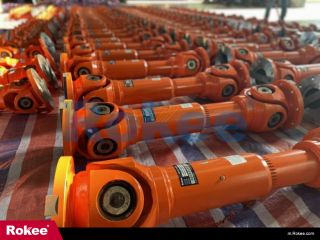


Our Universal Joint Couplings are widely used and have many impressive records. From micro products for modern logistics, artificial intelligence machinery, light products used in the paper industry, high speed and high performance products for engineering and railway vehicles, to super heavy duty products used in metallurgical rolling system systems, Rokee has won us with mature products and quality Long-term trust of customers, widely exported to Europe, America and other parts of the world.
All standard Cardan Couplings of Rokee are optimized design products based on the combination of decades of experience and computer design technology.,The products we are proud of are not only different from the national technical standards of China but also the standards of other manufacturers in the world. Unique design ideas and make perfection more perfect sprit drive our products find a better balance between lower price and rotational and transmission torque performance.
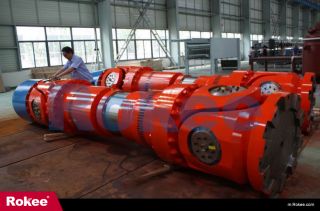
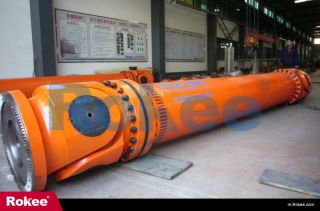

Rokee's standardized products also mean faster delivery and easier spare parts availability as well as quick maintenance service.
The Cardan Shaft products used in important equipment and core industrial fields have not only undergone careful design, but also comprehensive torque, stiffness, balance performance and life tests.
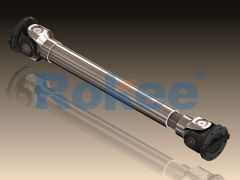
![Industrial Cardan Shaft,SWC-BH Standard Telescopic Welded Universal Coupling]()
SWC-BH Standard Telescopic Welded Universal Coupling
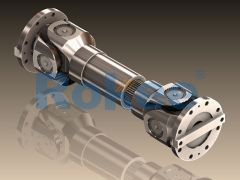
SWC-BH Universal Coupling adopts integrated fork head layout, with the rotary diameter of 1600mm and torque transmission distance of more than 30m. SWC-BH Cardan Shaft is widely used in steel rolling machinery, crane transport machinery and other heavy equipment fields.![Industrial Cardan Shaft,SWC-CH Long Telescopic Welded Universal Coupling]()
SWC-CH Long Telescopic Welded Universal Coupling
SWC-CH Universal Coupling adopts integrated fork head layout, with the rotary diameter of 1600mm and torque transmission distance of more than 30m. SWC-CH Cardan Shaft is widely used in steel rolling machinery, crane transport machinery and other heavy equipment fields.![Industrial Cardan Shaft,SWC-DH Short Telescopic Welded Universal Coupling]()
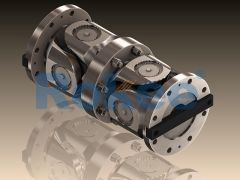
SWC-DH Short Telescopic Welded Universal Coupling
SWC-DH Universal Coupling adopts integrated fork head layout, with the rotary diameter of 1600mm and torque transmission distance of more than 30m. SWC-DH Cardan Shaft is widely used in steel rolling machinery, crane transport machinery and other heavy equipment fields.![Industrial Cardan Shaft,SWC-WD Non-telescopic Short Universal Coupling]()
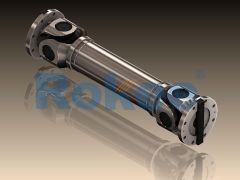
SWC-WD Non-telescopic Short Universal Coupling
SWC-WD Universal Coupling adopts integrated fork head layout, with the rotary diameter of 1600mm and torque transmission distance of more than 30m. SWC-WD Cardan Shaft is widely used in steel rolling machinery, crane transport machinery and other heavy equipment fields.![Industrial Cardan Shaft,SWC-WH Non-telescopic Welded Universal Coupling]()
SWC-WH Non-telescopic Welded Universal Coupling
SWC-WH Universal Coupling adopts integrated fork head layout, with the rotary diameter of 1600mm and torque transmission distance of more than 30m. SWC-WH Cardan Shaft is widely used in steel rolling machinery, crane transport machinery and other heavy equipment fields.![Industrial Cardan Shaft,SWP-A Universal Coupling]()
SWP-A Universal Coupling
SWP-A Universal Coupling adopts integrated fork head layout. Similar to the use of the SWC universal coupling, SWP-A Cardan Shaft is mainly used in the field of heavy-duty large equipment, with a rotary diameter of up to 1200mm.![Industrial Cardan Shaft,SWP-B Universal Coupling]()
SWP-B Universal Coupling
SWP-B Universal Coupling adopts integrated fork head layout. Similar to the use of the SWC universal coupling, SWP-B Cardan Shaft is mainly used in the field of heavy-duty large equipment, with a rotary diameter of up to 1200mm.![Industrial Cardan Shaft,SWP-C Universal Coupling]()
SWP-C Universal Coupling
SWP-C Universal Coupling adopts integrated fork head layout. Similar to the use of the SWC universal coupling, SWP-C Cardan Shaft is mainly used in the field of heavy-duty large equipment, with a rotary diameter of up to 1200mm.![Industrial Cardan Shaft,SWP-D Universal Coupling]()
SWP-D Universal Coupling
SWP-D Universal Coupling adopts integrated fork head layout. Similar to the use of the SWC universal coupling, SWP-D Cardan Shaft is mainly used in the field of heavy-duty large equipment, with a rotary diameter of up to 1200mm.
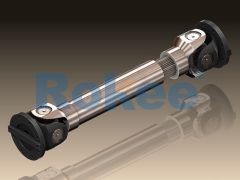
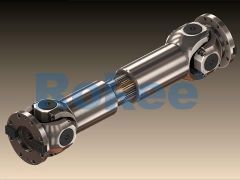
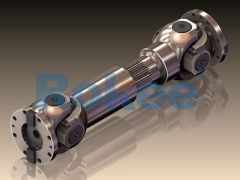
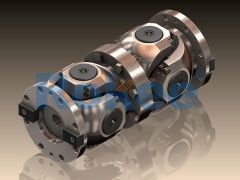
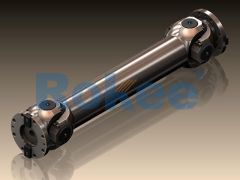
In the intricate web of industrial machinery, the efficient transfer of rotational power from a driving source to a driven component stands as a fundamental requirement. From heavy-duty manufacturing plants to agricultural fields, from marine vessels to construction sites, countless operations rely on mechanisms that can transmit torque reliably, even when the driving and driven shafts are not perfectly aligned. Among the various power transmission solutions available, the industrial cardan shaft emerges as a robust and versatile option, designed to handle misalignment, absorb shocks, and ensure consistent performance under demanding conditions.
To begin with, it is essential to define what an industrial cardan shaft is. Also known as a universal joint shaft or propeller shaft, a cardan shaft is a mechanical component used to transmit rotational motion and torque between two shafts that are offset at an angle to each other or have a relative displacement. Unlike rigid shafts, which require precise coaxial alignment to function effectively, cardan shafts are engineered to accommodate three types of misalignment: angular misalignment (where the two shafts form an angle), parallel misalignment (where the shafts are offset but parallel), and axial misalignment (where the shafts move along their respective axes). This unique capability makes them indispensable in applications where perfect alignment is either impossible to achieve or difficult to maintain due to dynamic operating conditions, such as vibration, thermal expansion, or structural movement.
The basic structure of an industrial cardan shaft consists of several key components, each playing a critical role in its overall functionality. At the heart of the assembly are the universal joints (U-joints), which are typically located at both ends of the shaft. A U-joint comprises two yokes (fork-shaped components) attached to the driving and driven shafts, and a cross (a four-armed component) that connects the two yokes. The cross is fitted with bearings at each arm, allowing it to rotate freely within the yokes. This design enables the U-joint to transmit torque while accommodating angular misalignment. In addition to the U-joints, the cardan shaft assembly includes a central shaft (the main body that carries the torque), flanges or splines for connecting to the driving and driven components, and sometimes a sliding joint (a telescopic section) to compensate for axial displacement. Depending on the application requirements, the shaft may also be equipped with protective covers to shield the U-joints and other moving parts from dust, debris, and environmental contaminants.
The working principle of the industrial cardan shaft revolves around the ability of the U-joints to convert rotational motion between misaligned shafts. When the driving shaft rotates, it imparts motion to the first U-joint’s yoke, which in turn rotates the cross. The cross then transfers this rotational motion to the second yoke, which drives the driven shaft. However, a single U-joint has a limitation: as the angle between the shafts increases, the rotational speed of the driven shaft becomes non-uniform, leading to a phenomenon known as “velocity fluctuation.” This fluctuation can cause vibration, noise, and increased wear on the machinery. To overcome this issue, industrial cardan shafts are almost always equipped with two U-joints, arranged in a way that the velocity fluctuations from the first U-joint are canceled out by the second. This configuration, known as a “double cardan shaft,” ensures that the driven shaft rotates at the same constant speed as the driving shaft, even when the shafts are misaligned at significant angles.
Material selection is a crucial factor in the design of industrial cardan shafts, as the materials must withstand high levels of torque, stress, and wear while maintaining structural integrity. The choice of material depends on various factors, including the application’s torque requirements, operating speed, environmental conditions (such as temperature, humidity, and exposure to corrosive substances), and weight constraints. For the central shaft, high-strength alloy steels are the most commonly used materials. These steels, which may contain elements such as chromium, nickel, and molybdenum, offer excellent tensile strength, fatigue resistance, and toughness, making them ideal for handling heavy loads and dynamic stresses. In some cases, carbon steel is used for less demanding applications where cost is a primary concern. The U-joint components, particularly the cross and bearings, are often made from hardened steel to enhance wear resistance. The bearings may also be coated with materials such as chrome or nickel to improve corrosion resistance. For applications in harsh environments, such as marine or chemical processing industries, stainless steel or composite materials may be used to prevent rust and degradation.
The versatility of industrial cardan shafts is reflected in their wide range of applications across various industries. One of the most prominent applications is in the automotive industry, where cardan shafts are used to transmit power from the transmission to the rear axle in rear-wheel-drive and four-wheel-drive vehicles. In this context, the cardan shaft must accommodate the movement of the rear axle as the vehicle travels over uneven terrain. Beyond automotive, the manufacturing industry relies heavily on cardan shafts in machinery such as conveyor systems, pumps, compressors, and industrial robots. Conveyor systems, for example, use cardan shafts to drive the rollers, even when the drive motor and the roller shafts are not aligned. In the agricultural sector, cardan shafts are essential components of tractors and farm machinery, transmitting power from the tractor’s engine to implements such as plows, harvesters, and sprayers. These applications often involve high torque and significant misalignment, requiring robust cardan shaft designs that can withstand harsh outdoor conditions.
The construction industry is another major user of industrial cardan shafts, with applications in equipment such as excavators, bulldozers, and cranes. In excavators, for instance, cardan shafts transmit power from the engine to the hydraulic pumps and the tracks, accommodating the dynamic movement of the machine’s components. Marine applications also utilize cardan shafts, where they are used to transmit power from the ship’s engine to the propeller. In marine environments, cardan shafts must be designed to resist corrosion from saltwater and handle the high torque required for propulsion. Additionally, the renewable energy sector, particularly wind energy, has begun to adopt cardan shafts in some wind turbine designs, where they help transmit power from the rotor to the generator, accommodating the slight misalignments that may occur due to wind-induced vibrations.
Proper maintenance is essential to ensure the long-term performance and reliability of industrial cardan shafts. Neglecting maintenance can lead to premature failure, costly downtime, and potential damage to other components of the machinery. The key maintenance practices for cardan shafts include regular inspection, lubrication, and replacement of worn parts. Inspections should be conducted to check for signs of wear, such as excessive play in the U-joints, cracks or deformations in the shaft or yokes, and damage to the bearings. Visual inspections can often reveal surface defects, while more detailed checks may involve measuring the runout of the shaft to detect misalignment or imbalance. Lubrication is critical to reduce friction between the moving parts of the U-joints and bearings. The type of lubricant used should be appropriate for the operating conditions, such as high temperatures or heavy loads, and the lubrication schedule should be followed strictly to prevent dry running, which can cause severe wear.
In addition to inspection and lubrication, it is important to ensure that the cardan shaft is properly aligned during installation and operation. While cardan shafts are designed to accommodate misalignment, excessive misalignment can lead to increased stress, vibration, and wear. Regular checks of the alignment between the driving and driven shafts can help prevent these issues. If worn components are detected, such as damaged bearings or worn U-joint crosses, they should be replaced promptly to avoid further damage to the shaft assembly. It is also recommended to keep the protective covers in good condition to prevent the ingress of dust and debris, which can accelerate wear and corrosion.
As industrial technology continues to evolve, the design and performance of industrial cardan shafts are also undergoing advancements to meet the changing needs of modern industry. One of the key trends is the integration of advanced materials and manufacturing processes to enhance performance while reducing weight. For example, the use of lightweight composite materials in the shaft body can help reduce the overall weight of the assembly, which is particularly beneficial in applications where weight is a critical factor, such as automotive and aerospace. Additionally, advancements in additive manufacturing (3D printing) have made it possible to produce complex U-joint components with improved geometries, enhancing their strength and durability while reducing production costs.
Another emerging trend is the development of smart cardan shafts equipped with sensors and monitoring systems. These sensors can detect parameters such as torque, temperature, vibration, and wear, providing real-time data to operators. This predictive maintenance approach allows operators to identify potential issues before they lead to failure, minimizing downtime and reducing maintenance costs. For example, a sensor monitoring the vibration of the U-joints can detect abnormal patterns that indicate worn bearings, allowing for timely replacement. In addition, the use of digital twins—virtual replicas of the cardan shaft—enables engineers to simulate the shaft’s performance under different operating conditions, optimizing its design and predicting its service life.
Efficiency is also a key focus in the evolution of industrial cardan shafts. Manufacturers are developing designs that reduce energy loss due to friction and misalignment, improving the overall efficiency of the power transmission system. This includes the use of low-friction bearings, optimized U-joint geometries, and improved lubrication systems. In addition, the trend toward miniaturization in many industries has led to the development of compact cardan shaft designs that can transmit high torque in limited spaces.
Despite the advancements in alternative power transmission technologies, such as hydraulic and electric drives, the industrial cardan shaft remains a vital component in many applications due to its unique combination of robustness, versatility, and cost-effectiveness. Hydraulic drives, while capable of handling misalignment, are often more complex and expensive to maintain, making them less suitable for some industrial applications. Electric drives, on the other hand, require precise alignment in many cases, limiting their use in dynamic environments where misalignment is common. The cardan shaft’s ability to handle misalignment with minimal energy loss and low maintenance requirements ensures that it will continue to play a key role in industrial power transmission for the foreseeable future.
In conclusion, the industrial cardan shaft is a critical component in the world of power transmission, enabling the reliable operation of countless industrial machines across a wide range of sectors. Its design, which incorporates U-joints and a robust central shaft, allows it to accommodate misalignment and transmit torque efficiently, even under demanding conditions. The careful selection of materials ensures that it can withstand high levels of stress and wear, while proper maintenance practices extend its service life and ensure optimal performance. As industry continues to evolve, the cardan shaft is adapting to meet new challenges, with advancements in materials, manufacturing, and smart monitoring technologies enhancing its efficiency and reliability. Whether in automotive, manufacturing, agriculture, construction, or marine applications, the industrial cardan shaft remains a cornerstone of modern industrial operations, proving its enduring value in the transfer of rotational power.
« Industrial Cardan Shaft » Post Date: 2023/10/20
URL: https://www.rokeecoupling.com/en/blog/industrial-cardan-shaft.html
Tags: Cardan Shaft Couplings, Cardan Shaft, pu sandwich panel line